Registration is open for NSPECon26 in New York City, New York!
 Volunteering at NSPE is a great opportunity to grow your professional network and connect with other leaders in the field.
 Decisions at the ballot box influence policies that support engineering standards and public safety.
August/September 2014
PE REPORT
India and Sri Lanka Join Washington Accord
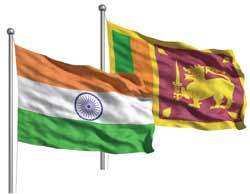 India’s National Board of Accreditation and the Institution of Engineers Sri Lanka have recently joined the Washington Accord, an international recognition agreement between organizations that accredit undergraduate engineering degree programs.
Organizations that become accord signatories recognize that accreditation of engineering programs is a critical foundation for the practice of engineering at the professional level and competence is developed through education, training, and experience. They recognize students who have obtained these degrees and have met academic standards to practice engineering in these member nations. The accord, however, does not directly apply to licensure of professional engineers.
India became a provisional signatory to the accord in 2007, but its path to becoming a full signatory came under scrutiny in 2009 following reports of bribery in its accreditation process. Only after India made changes to its accreditation process, including the creation of the independent National Board of Accreditation in 2010, did the other Washington Accord countries consider approval as a full signatory.
The Washington Accord was established in 1989 with Engineers Australia, Engineers Canada, Engineers Ireland, the Institution of Professional Engineers New Zealand, the Engineering Council of United Kingdom, and the Accreditation Board for Engineering and Technology (ABET) in the US. An organization that wants to become a member of the accord must demonstrate that its accreditation standards, policies, and procedures are substantially equivalent to the other accreditation bodies. The applicant must also have the initial support of two signatories and will be required to hold a provisional status for at least two years. Final admission into the accord requires unanimous approval.
Other accord members are the Hong Kong Institution of Engineers (1995), the Engineering Council of South Africa (1999), the Japan Accreditation Board for Engineering Education (2005), the Institution of Engineers Singapore (2006), the Institute of Engineering Education Taiwan (2007), the Accreditation Board for Engineering Education of Korea (2007), the Board of Engineers Malaysia (2009), MUDEK of Turkey (2011), and the Association for Engineering Education of Russia (2012).