

 Registration is open for NSPECon26 in New York City, New York!
 Volunteering at NSPE is a great opportunity to grow your professional network and connect with other leaders in the field.
 Decisions at the ballot box influence policies that support engineering standards and public safety.
What the engineering profession can learn from Title IX about leadership, increasing opportunities, and the work still ahead.
I introduced Sarah, a composite engineer whose talent was never the problem, in the "She Built the Future. Then She Left" article, the first in a series of articles in PE focused on retaining women in the engineering field. Sarah left the profession not because she failed, but because the environment around her made it progressively harder to be heard, credited, and advanced in her career. In the second article, she was equipped with practical career tools: language for difficult moments, preparation before high-stakes meetings, negotiation leverage, documentation discipline, and sponsors willing to advocate on her behalf. But the first two articles left a larger question unanswered.

Sarah excels. She shows up, steps up, and prepares for the next leap. Yet the high-profile projects still land in the same hands, passed along to familiar networks and with old assumptions. When talent is present, but opportunity is not, this poses a question that is bigger than just addressing Sarah’s experience. What does our profession owe to every engineer held back not by skill, but by limited access?
This scenario is no longer only a question about women. It is a question about how the engineering profession distributes opportunity. Women gave this series its opening case for a reason: their attrition from engineering is unusually well documented, including the widely cited pattern of substantial loss within the first decade of practice. But the issue extends far beyond a single statistic. Engineers from underrepresented groups, engineers with disabilities, first-generation professionals, and others who have historically stood outside the informal networks of advancement describe many of the same obstacles: less access to stretch assignments, less sponsorship, less visibility, and fewer chances to build the portfolios senior leaders look for.
The profession has long operated on an assumption that advancement reflects merit, and that merit reveals itself to neutral observers. The evidence tells a different story. When engineers with similar credentials and performance records advance at different rates by gender, race, or disability status, the variable is not talent. It is the system through which talent is recognized, developed, and rewarded. Engineers know what to call a system that yields inconsistent, inequitable outcomes. They call it a design problem.
Advancement Is Engineered, Not Natural
Engineers understand that performance does not emerge from aspiration alone. It is shaped by design. A bridge does not fail randomly. A process does not underperform by accident. If results repeatedly fall short of what the inputs should produce, the cause is usually found in the structure of the system itself. The same logic applies to professional advancement.
The engineering profession has made meaningful progress at the point of entry. Women earn more engineering degrees than a generation ago. Organizations have invested in recruitment, mentoring, and inclusion. But representation at entry is not the same as equitable access to the experiences that determine who advances. That distinction matters.
A 2016 study commissioned by the Society of Women Engineers and conducted by the WorkLife Law Center (Why Women Leave Engineering: The SWE Gender Culture Study) found that women engineers were far less likely than men to report having the same access to desirable assignments, at 65% versus 85%. These are not minor differences. They are the difference between building a record of technical leadership and being left with a portfolio of supporting work. They are also the difference between being seen as ready for the next level and being told, years later, that one’s resume lacks the "right" experience.
This is not a talent gap. It is an opportunity gap. And once we name it that way, the profession can stop treating unequal advancement as an unfortunate cultural haze and start treating it as what it is, a design problem that can be measured, audited, and improved.
The Problem Starts Before the Promotion Decision
Unequal advancement does not begin at the promotion meeting. It begins long before that, in unequal access to formative experience.
Some professionals arrive having had years of practice in environments where leadership is earned, contested, and performed under pressure. Others arrive with less exposure to those developmental conditions, not because they lacked ability, but because those experiences were distributed unevenly. Access to competitive environments, public evaluation, role accountability, performance under scrutiny, and the expectation of belonging in high-stakes spaces has never been shared equally across gender, race, class, disability status, or social network.
That matters in engineering because advancement is cumulative. The person who gets the high-visibility assignment gains visibility. Visibility builds trust. Trust opens the next opportunity. Over time, that sequence hardens into what looks like a meritocracy, even when the opportunity structure underneath it was never evenly distributed.
In other words, by the time the profession asks who is ready, it is often evaluating not only ability, but accumulated access. Once again, that is a design problem.
What Title IX Revealed
This argument is where Title IX becomes more than a story about athletics. Passed in 1972, Title IX prohibited sex discrimination in federally funded education programs. It was not drafted as a leadership-development policy. Yet over the decades, it produced one of the clearest examples in modern American life of what happens when institutions widen access to formative experience at scale.
Before Title IX, women represented just 15% of college athletes. After Title IX, women’s participation in collegiate athletics rose dramatically, and millions more girls and young women gained access to structured competition, team accountability, performance-based evaluation, and the experience of earning and holding roles under pressure. It’s not about the sport itself, it’s about the environment it creates. Sports cultivate grit, confidence under evaluation, the muscle to recover after failure, and ease performing when results are visible and contested. In other words, they teach leadership.
The downstream effects are well documented. Research shows strong and consistent links between athletic participation and women’s later leadership outcomes, including C-suite representation, formal leadership roles, and the self-reported professional benefit of skills built in competitive environments. A comprehensive EY and ESPN-W study (Where will you find your next leader? EY and ESPN-W explore how sport advances women at every level.) found that 94% of women in C-suite positions played sports. The Women’s Sports Foundation’s 2024 Play to Lead report, which surveyed 2,886 women across seven generations, found that among women who played sports, 69% hold formal leadership roles, and that the longer a woman played, the more likely she was to lead. The generational trend is especially instructive. As institutions widened access to formative opportunity across successive generations, leadership pipelines changed.
Title IX did not create talent. It created access. It did not lower standards. It widened the population able to prepare for them. Access is the real lesson of Title IX. And that lesson extends well beyond women, well beyond athletics, and well beyond 1972.
The Lesson Is Larger Than One Law
The engineering profession should not read Title IX narrowly, as a single historical story about women’s sports. It should read it as a case study in institutional design. When institutions widen access to leadership-forming experience, who leads changes.
That principle extends to the workplace systems that assign stretch work. It applies to those who get sponsorship. It applies to which engineers are introduced to clients, put on major proposals, asked to present to executives, named to visible technical roles, or trusted with difficult programs. It applies to whether engineers with disabilities are given accessible pathways into high stakes work rather than silently routed around it. It applies to whether underrepresented professionals are fully included in the informal channels where advancement often begins before it is ever formally announced.
The evidence need not be symmetrical across every group to be compelling. The patterns are recognizable across the profession; unequal access to developmental opportunity produces unequal leadership pipelines. Engineering should know how to respond to that insight.
What the Engineering Profession Can Do
The encouraging part of this argument is that it does not require the profession to become something new. It asks the profession to do what it already does well: analyze, redesign, measure, and improve. That work can be specific and actionable.
- Audit developmental opportunity, not just hiring. Organizations that track representation at the point of hire but not at the point of assignment are measuring inputs while ignoring the process that determines outputs. Formal audits of who receives high-visibility projects, complex technical leadership roles, and external representation opportunities will reveal whether the advancement system is performing as designed.
- Formalize assignment processes. When high-visibility projects are assigned through informal conversations and pattern recognition, the outcome reflects historical distributions of access, not current distributions of talent. Structured criteria for assignment decisions, applied consistently and reviewed for equity, interrupt that pattern without requiring anyone to abandon judgment. They require judgment to be made transparent.
- Build sponsorship paths, not just mentorship programs. Mentorship provides guidance. Sponsorship provides advocacy in the rooms where assignments and promotions are decided. For engineers from historically underrepresented groups, the absence of sponsorship is often the proximate cause of stalled advancement. Professional societies, including NSPE, are positioned to formalize sponsorship pathways that extend advocacy beyond existing informal networks.
- Make accessibility part of advancement design, not a compliance afterthought. Capable engineers are being excluded from stretch opportunities because systems, assumptions, and workplace design make full participation harder. That outcome is not merely unfortunate. It is a waste of talent the profession cannot afford.
- Advocate for the policy conditions that widen access upstream. Title IX teaches that policy can shape developmental opportunities long before the workplace sees the result. The profession can engage on policy questions that determine whether future engineers, from all backgrounds, gain access to the formative experiences that build leaders.
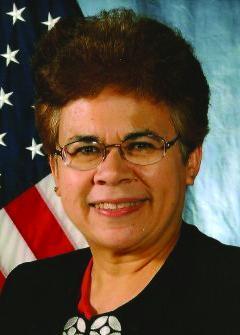
Aurea L. Rivera, P.E., F.NSPE, PMP, PMI-ACP, is the founder of Carbon Metrics Global. Rivera serves as the Central Region director on the NSPE Board of Directors. She seeks to build bridges in engineering through communication and collaboration.
More Featured Articles

What it takes for women engineers to remain present and heard.

NSPE, the American Institute of Architects, and the American Council of Engineering Companies have released the latest annual risk management survey of professional liability insurance carriers.

The United States leads the world in the number of quantum technology startups and global revenues are expected to reach $72 billion by 2035. The technology is still a mystery to the public, but can we solve the unsolvable with the "strangeness" of quantum computing?
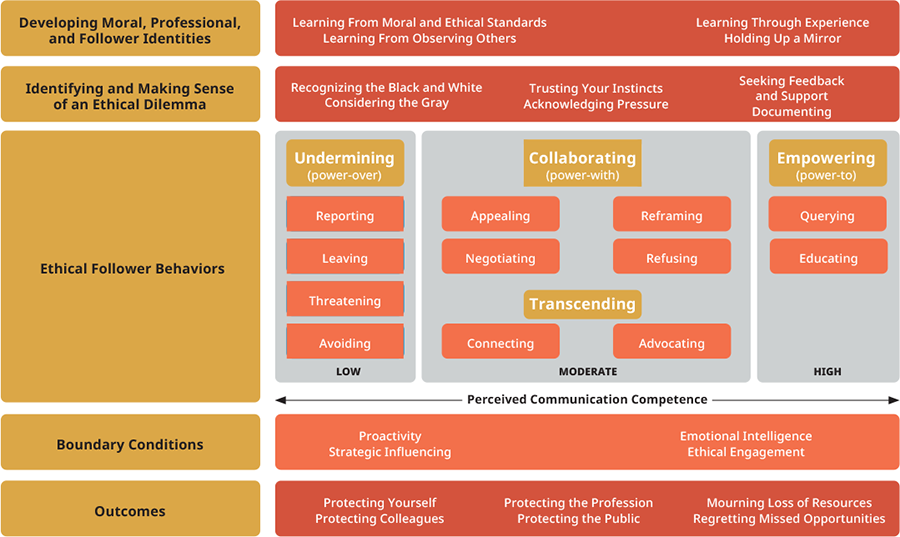
It is important for professional engineers to understand and apply professional ethical standards in their work. While engineers do not struggle to distinguish right from wrong, they face obstacles when trying to influence leaders and their colleagues. A new study offers guidance on how to resist unethical requests and empower others to make the right decision. >>


Licensure exemptions make way for too many engineering projects that are conducted without the direction of PEs—whose paramount responsibility is public protection. The public, which thinks highly of engineers, is not aware that this subjects them to unnecessary risks. There are opportunities for the engineering community to unite to protect the public by reducing or eliminating licensure exemptions. >>

During the height of the COVID pandemic, the level of fear across the globe was unprecedented in living memory. Fortunately, there were a select number of engineers who could help during this time of crisis. Capt. Stephen Martin Jr., Ph.D., P.E., received the 2024 Federal Engineer of the Year Award for using his expertise during the pandemic. >>


The arrival of ChatGPT and other artificial intelligence systems has entered the public consciousness with a vengeance. This new tech is disorienting and raises many questions. How will these systems affect the world of work? Will they take over my job? How will they affect the practice of engineering? An analysis of the introduction of past technologies may offer guidance. >>

DiscoverE has released its latest research on the views of high school students and parents on engineering and engineering careers. The Messages Matter results were encouraging as they reveal that targeted messages and profiles of engineers can spur interest in engineering among the very groups that will ensure a more diverse future for the field. »

NSPE members and professional licensed engineers are stepping up to lead on creating sustainable and resilient communities. This issue of PE magazine offers insight on the role of the engineering community with climate change and puts a spotlight on a Vermont engineering college program that is nationally recognized for its zero energy design focus. »