

 Registration is open for NSPECon26 in New York City, New York!
 Volunteering at NSPE is a great opportunity to grow your professional network and connect with other leaders in the field.
 Decisions at the ballot box influence policies that support engineering standards and public safety.
The United States leads the world in the number of quantum technology startups and global revenues are expected to reach $72 billion by 2035. The technology is still a mystery to the public, but can we solve the unsolvable with the "strangeness" of quantum computing?
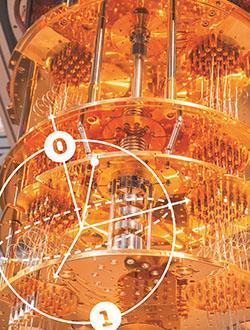
Google Quantum AI recently announced1 that its Willow quantum processor outperformed one of the world’s fastest supercomputers. A complex benchmarking calculation that would take such a supercomputer 10 septillion years could be accomplished by Willow in less than five minutes. What’s 10 septillion? (I didn’t know either). It’s a 10 followed by 24 zeros.
Learning about this time concept led me to reflect on a recent travel experience. The long wooden communal tables at Harpoon Brewery inside Boston’s Logan Airport were full of travelers and rows of luggage whose handles were doubling as coat hangers. Though not directly in the city, the restaurant still gave off distinct Bostonian vibes, but with views of a harborside tarmac instead of the city’s historic cobblestone streets.
I was stuck. My connection to Edinburgh, Scotland, had been delayed by nearly three hours, so I was passing the time with one of Harpoon’s famous homemade pretzels, a cold beverage, and a chance to whittle down my inbox messages.
But three hours still felt like a lot of time. Until I compared it to 10 septillion years. My flight delay suddenly didn’t feel so bad. Possibly still the right order of magnitude for my inbox, but that’s a whole lot of pretzels to consume. Now let’s get on to the topic at hand.
The United States of Quantum
Quantum computing is still a developing technology, but near-term applications have started to appear. While conceptualized decades ago by American Nobel Laureate Richard Feynman2 and British physicist David Deutsch3, quantum computing has only recently become commercially feasible.
The United States leads the world in the number of quantum startups and is part of a global quantum market whose value, according to a 2024 McKinsey study4, could grow to $173 billion by 2040. Investments have been forming across the country, from the Elevate Quantum technology hub spanning Colorado, New Mexico, and Wyoming5, to Chattanooga, Tennessee (shout out to my hometown) where the EPB Quantum Network6 is connecting quantum technologies across the region. The potential of these technologies is enabled by the "science-meets-science-fiction" properties of quantum mechanics. So, this all sounds very exciting, but what exactly is a quantum computer?
Artists, Engineers, and Quantum Magic
Iconic American artist and sculptor Alexander Calder (1898 - 1976) started his career as a mechanical engineer, graduating from the Stevens Institute of Technology in New Jersey. While working on a passenger ship off the coast of Guatemala, Calder witnessed a bright red sun setting at the very same moment the moon was rising into the evening sky7.
This striking image inspired much of Calder’s artwork, like The Spinner8 at the Walker Arts Center in Minneapolis, Minnesota, which delicately balances steel and aluminum, rotated in place by the wind, tilted by gravity, showing that the balance of some elements are dependent on the simultaneous balance of others. And it is this idea of being two things at once that brings us to one of quantum computing’s first strange properties — superposition.
Classical Bits, Qubits, and Superposition
Classical computing is what we would consider all things computing today. From the iPhones and Google Pixel smartphones in our pockets to the graphics processors powering your favorite CAD software. In the classical world, it is the movement of electrons that creates bits, those strings of ones and zeros that process and send information across our digitized world. Classical bits can only have a value of one or zero and that’s it.
A quantum bit, or "qubit," however, can have values of one and zero simultaneously or a probabilistic combination of anything in between until measured. This characteristic is called "superposition." The advantage of superposition is that qubits don’t have to wait in long lines and process serially like classical bits. Superposition allows qubits to explore multiple probable outcomes all at once.
Not Strange Enough for You? Don’t Worry, It Gets Stranger
The other distinct property of quantum computation is a phenomenon that Albert Einstein called, "spooky action at a distance." Physicists have a more concise, though no less haunted, term for this: entanglement.
In quantum mechanics, two particles, say photons, can be generated in an entangled state. A little more heavy lifting is needed to really get into the details here, but for our purposes just know that one method of establishing entanglement involves shooting lasers at crystals (like I said, science fiction).
Being entangled means that even if separated to the opposite ends of the universe, knowing the properties of one of those particles lets you immediately know the properties of its counterpart. Combined with superposition, it’s these properties that enable quantum computers to calculate so expansively beyond classical computers.
But it’s not just about enabling speed. Quantum computing’s true promise is the ability to solve problems on a timescale that’s intractable by classical supercomputers.
But one problem still stands in the way—the real world.
When Particles Stop Being Polite (And Start Getting Real)
When you turn on the lights in your office to review site plans, photons fill the room. When running calculations on your laptop, the lights from the ceiling illuminate your keyboard, but have no effect on the CPU inside that’s crunching the numbers.
But for a quantum computer, stray light or even the thermal motion of electrons moving through a transistor can create noise, obscuring the actual measurement you are trying to obtain. Noise at this scale is unnoticeable to us in the classical world, but at the quantum scale, it’s unbearable.
Two methods that address noise in quantum computing, error mitigation and error correction, have entirely dedicated fields of research. These involve finely tuned quantum algorithms that manage the noise you’re getting to begin with while carefully teasing out good signals from bad. The goal to reliably separate signal from noise is quantum’s Holy Grail, referred to as "fault tolerant" quantum computing.
This sounds like a whole lot of work just to get a computer up and running, so why pursue quantum at all? With all due respect to Lady Gaga, there are a septillion reasons.
Quantum Realities and Professional Engineers
Professional engineers are often tasked with optimizing designs that have to withstand the outside world while staying on schedule, remaining under budget, and keeping society safe. No small order.
But it’s exactly these types of problems where future quantum computers could excel, in scenarios where an unfathomable amount of real-world variables are difficult to model, but are critical for assessing real-world behavior.
Many years ago, I visited the Idaho Society of Professional Engineers for their annual conference at the gorgeous lakeside town of Coeur d’Alene and toured the I-90 Veterans Memorial Centennial Bridge. As a chemical engineer, the term "box girder bridge" was not in my vocabulary. And now, suiting up in a hard hat and safety vest, I was given the chance to literally climb inside of one.
I was fascinated by our hosts’ explanations of their material and design choices, and the challenging nature of modeling a bridge in the face of vibrations from traffic, fluctuating seasonal temperatures, and the forces of nature from the winds above and the waters below. We can do a lot with modeling today, but what if we could step up our simulation capabilities exponentially?
Quantum computers could one day supercharge and augment an engineer’s existing expertise with significant speedups over classical methods. There is the potential for higher order computational fluid dynamics around bridge columns, increased degrees of freedom in finite element analyses, and higher fidelity modeling in the geotechnical analysis of soil structures. So how do we get from today’s reality to these dreamy quantum-enabled futures?

Scale Quantum, Not Bureaucracy
Engineers are used to a range of standards, from National Electric Code regulations to fire protection. Developing quantum technology standards is increasingly important to economically scale the quantum industry.
But there’s a dilemma. Standardize too early and innovation can be stopped in its tracks. Standardize too late and firms may need to build against criteria written without their input.
To crack this code, international standards bodies the International Electrotechnical Commission and the International Organization for Standardization recently formed their first Joint Technical Committee (JTC) in nearly 40 years: JTC 3 - Quantum Technologies9. The work of the United States National Committee to JTC 3 focuses on the purpose of standards, not standards for the sake of standardization. Our mantra is "scale quantum, not bureaucracy."
Current efforts include prioritizing those standards that can have the greatest near-term impact to cost, capacity, and risk in the quantum hardware supply chain. But it doesn’t stop there. Quantum hardware needs a place to live, and with infrastructure demands and the utilities powering them come the expertise of professional engineers.
Some Beach, Somewhere
The Shellback Tavern, which has been a local Manhattan Beach, California, watering hole since 1922, is steps from the Pacific Ocean and just a short traffic jam from LAX airport. While the city hurries by at a frenetic pace outside, the inside of the tavern moves more slowly with faded wood interiors, surf themed memorabilia, and Los Angeles Dodgers games on the television.
I was in Los Angeles to unravel a supply chain interruption. We needed to find a replacement cable vendor that could deliver high volumes of product quickly or risk a data center buildout falling behind schedule.
I had stepped outside to take a call with the supplier to arrange for the next day’s factory visit. As I watched beach volleyballs in the distance get spiked into the sand, the supplier uttered words that made that oceanside sunset in front of me even more beautiful, "Yes, we do manufacture to that cable standard."
When you have materials produced to a standard, you can cost-effectively focus your expertise on the true objectives at hand, whether it’s building a box girder bridge, powering a data center, or cooling a superconducting quantum computer to temperatures colder than deep space.
Basic things like cable standards don’t fully exist today for quantum computing. But to create the right ones, we need expertise from physicists, operations managers, and structural engineers alike.
Aspirations for Human Progress
NSPE founder David Steinman was known for his bridge designs, but in a superposition of art and science, he was also a poet10. His work showed how aspirations for human progress were part of an engineer’s greater role in society. The following is from Steinman’s poem "The Bridge."
Professional engineers thrive at the intersection of technology, legal compliance, and public safety and are needed to build the literal and metaphorical bridges that join the classical and quantum worlds. Together, we could one day solve the toughest problems in modern engineering that are unsolvable today. Come join the valiant band.
Sources:
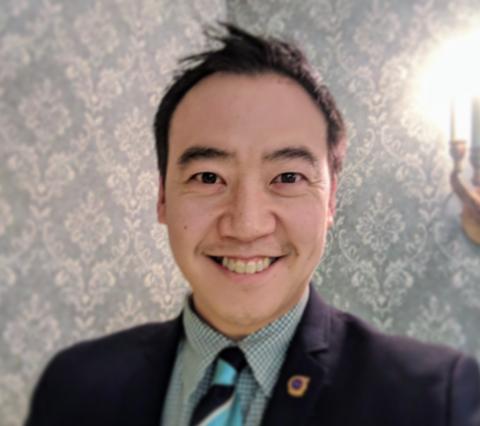
AUSTIN S. LIN, F.AICHE, F.ASQ, WORKS IN SILICON VALLEY AND SERVES AS CHAIR OF THE UNITED STATES NATIONAL COMMITTEE TO THE IEC/ISO JOINT TECHNICAL COMMITTEE - QUANTUM TECHNOLOGIES (JTC 3) AND AS THE VICE CHAIR OF THE STANDARDS AND PERFORMANCE METRICS TECHNICAL ADVISORY COMMITTEE OF THE QUANTUM ECONOMIC DEVELOPMENT CONSORTIUM (QED-C).
More Featured Articles
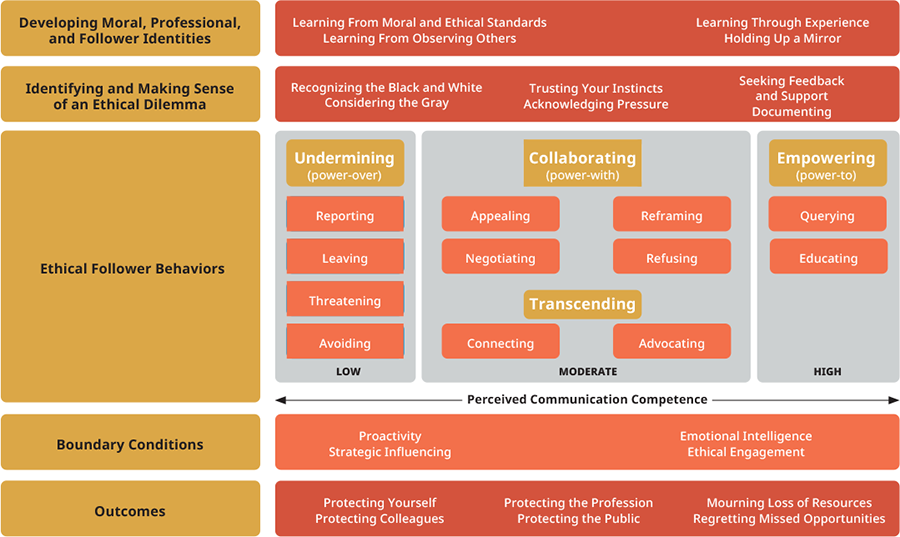
It is important for professional engineers to understand and apply professional ethical standards in their work. While engineers do not struggle to distinguish right from wrong, they face obstacles when trying to influence leaders and their colleagues. A new study offers guidance on how to resist unethical requests and empower others to make the right decision. >>

Licensure exemptions make way for too many engineering projects that are conducted without the direction of PEs—whose paramount responsibility is public protection. The public, which thinks highly of engineers, is not aware that this subjects them to unnecessary risks. There are opportunities for the engineering community to unite to protect the public by reducing or eliminating licensure exemptions. >>

During the height of the COVID pandemic, the level of fear across the globe was unprecedented in living memory. Fortunately, there were a select number of engineers who could help during this time of crisis. Capt. Stephen Martin Jr., Ph.D., P.E., received the 2024 Federal Engineer of the Year Award for using his expertise during the pandemic. >>

The arrival of ChatGPT and other artificial intelligence systems has entered the public consciousness with a vengeance. This new tech is disorienting and raises many questions. How will these systems affect the world of work? Will they take over my job? How will they affect the practice of engineering? An analysis of the introduction of past technologies may offer guidance. >>

DiscoverE has released its latest research on the views of high school students and parents on engineering and engineering careers. The Messages Matter results were encouraging as they reveal that targeted messages and profiles of engineers can spur interest in engineering among the very groups that will ensure a more diverse future for the field. »

NSPE members and professional licensed engineers are stepping up to lead on creating sustainable and resilient communities. This issue of PE magazine offers insight on the role of the engineering community with climate change and puts a spotlight on a Vermont engineering college program that is nationally recognized for its zero energy design focus. »
It’s essential that professional engineers have access to all possible protections from frivolous lawsuits. NSPE pays close attention to proposed legislation, proposed regulations, and court cases affecting the profession. NSPE and state societies take action by reaching out to legislators and agencies to educate and explain the implications of language under consideration. »
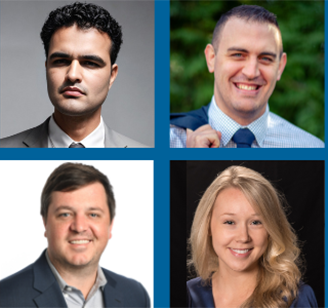
NSPE’s Emerging Leaders Program supports the leadership growth of early-career professionals and helps them develop the skills needed to advance beyond the technical. The program’s graduates are taking their careers to the next level and pursuing opportunities to be engineering change makers. »
According to a September survey of 15 leading engineers’ professional liability insurance carriers, there are new pressures on the market. While rates may hold for a time, we can anticipate pressure to increase deductibles. Furthermore, carriers will be evaluating risk factors more closely and adding some new characteristics for monitoring. »