

 Registration is open for NSPECon26 in New York City, New York!
 Volunteering at NSPE is a great opportunity to grow your professional network and connect with other leaders in the field.
 Decisions at the ballot box influence policies that support engineering standards and public safety.
What it takes for women engineers to remain present and heard.

In a previous PE article ("She Built the Future. Then She Left"), I wrote about Sarah, a composite engineer whose story reflects the experience of thousands of women who entered engineering, contributed meaningfully, and then left the profession. She did not leave because she lacked ability. She left because, over time, the environment around her made it harder to keep her voice, her authority, and her future in the room.
After that article was published, one question stayed with me: What would Sarah have needed to stay?
That question matters because naming the challenge is not enough. Women in engineering don’t just need encouragement or generic advice to "speak up more." They need concrete strategies, professional support, and language they can use in the moments that truly shape careers.
This article is for Sarah, and for every engineer who has ever watched her contribution redirected, her authority softened, or her leadership deferred.
The Conference Room
Sarah has just presented a solution to a manufacturing problem that has stalled her team for months. She built the analysis, tested the assumptions, and developed the path forward. Her manager responds, "Great work. Can you take notes while we discuss implementation?"
On the surface, it sounds minor. In reality, it is not minor at all. Her work has been acknowledged, but her authority over it has been quietly removed.
That is how many career-defining moments happen. Not as dramatic confrontations, but as small redirections. A contribution is recognized, but the leadership attached to it is handed elsewhere. The room moves on. The moment passes. The pattern remains.
This is why the answer cannot simply be, "She should have been more assertive." The real question is whether Sarah had the tools to respond effectively, without paying an unfair penalty for doing so.
Why "Just Be More Assertive"
Fails Women in male-dominated professions are often given a familiar script to be more confident, negotiate harder, take up more space, lean in. The trouble is that this advice is often incomplete and, in some cases, actively unhelpful. Research has shown that women who negotiate or speak assertively often face a social penalty that men do not. The same behavior that earns a man the label of "decisive" can cause a woman to be seen as "abrasive," "difficult," or "not collaborative." The issue is not simply whether a woman speaks. It is how her speech is received.
That reality does not mean women are powerless. It means the playbook must be more sophisticated than being advised to "act more like the men in the room." Female engineers do not need advice that ignores the environment they are navigating. They need tools that help them protect credibility, reclaim authorship, and preserve opportunity.
What Sarah Needed
What does Sarah really need? She needed more than confidence. She needed infrastructure.
Sarah needed language for the moment itself. She needed preparation before she entered the room. She needed leverage beyond the room. She needed relationships that strengthened her standing, not just her morale. And she needed a professional community that treated this challenge as real, rather than as a personal weakness to overcome quietly. Above all, she needed a level playing field—conditions that made it possible for her voice to matter, not just her persistence.
These are not "women’s issues" in the narrow sense. They are professional survival tools in environments where authority is not always distributed fairly. But for women in engineering, where bias is often subtle, cumulative, and costly, they can make the difference between staying and leaving.
Tool 1: Language for the Moment
When a contribution is redirected in real time, the goal is not escalation. The goal is to reclaim authorship with precision.
Simple, professional phrases can redirect a conversation without turning it into a confrontation:
- "To build on the solution I just outlined…"
- "I’d like to respond to that directly, since this was my analysis."
- "Before we move on, let me clarify the implementation logic behind my recommendation."
These responses reattach the speaker to her work.
They remind the room who owns the analysis, without accusing anyone of bad intent.
When a pattern needs to be addressed more directly, factual "I" statements are often more effective than broad accusations:
- "I noticed that after I presented the design recommendation, the follow-up discussion shifted away from me. I want to make sure I’m able to lead implementation on work that I developed."
- "I’ve observed that my technical contributions are sometimes acknowledged, but I’m then moved into a support role during execution. I’d like to discuss that pattern."
This is not about being softer. It is about being exact. Engineers understand the value of precision in technical work; the same principle applies in professional communication.
Tool 2: Preparation Before the Meeting
The best response in a difficult moment often begins before the meeting starts.
If an engineer knows a challenging dynamic exists, preparation matters. That may mean scripting a response in advance, rehearsing a sentence until it feels natural, or deciding ahead of time how to handle interruption, redirection, or credit diffusion.
This is not overthinking. It is disciplined preparation.
Engineers do not walk into high-risk technical reviews without planning. They model, test, and anticipate failure modes. Professional situations deserve the same seriousness. When women are expected to improvise through biased dynamics with no preparation and no tools, the burden is unfair and the odds are worse. Preparation turns surprise into response.
Tool 3: BATNA, Leverage Beyond the Room
One of the most useful concepts in negotiation is BATNA: Best Alterna-tive to a Negotiated Agreement. Developed through the Harvard Program on Negotiation by Roger Fisher, William Ury, and Bruce Patton in their foundational work, Getting to Yes, BATNA answers a deceptively simple question—what is the best outcome available to you if the current situation does not improve?
Put plainly: what are your alternatives, and how strong are they?
"Your BATNA is the only standard that can protect you both from accepting terms that are too unfavorable and from rejecting terms it would be in your interest to accept," according to Fisher, Ury and Patton.
This strategy matters because professional power rarely begins in the room itself. It begins in what the room knows you can do without it. The research is clear, women who enter negotiations with stronger outside alternatives achieve better outcomes, not because they negotiate more aggressively, but because they negotiate from a position of genuine leverage.
For female engineers, building that leverage is both strategic and concrete.
What BATNA Looks Like in Engineering
- Licensure as market standing. A PE license is not only a credential, but also a quantifiable differentiator. Bureau of Labor Statistics (BLS) data consistently documents salary premiums for licensed engineers. Before any compensation negotiation, know what the licensed rate is in your market, your specialty, and your years of experience. That number is your floor, not your opening.
- Network as opportunity generator. NSPE chapters, state societies, and peer relationships are not simply sources of encouragement. They create market visibility that produces outside alternatives, and outside alternatives are the most concrete form of negotiating leverage that exists. Every meaningful professional connection is a potential BATNA in development.
- Scope and title, not only salary. Research on career negotiation identifies role development, project assignment, title, authorship, professional development access, as a critically underused leverage point. Your BATNA does not have to be another employer. It can be a clear understanding of what you will and will not accept in the role you already hold.
- Data as neutral ground. "I feel undervalued" is easy to dismiss. "Based on BLS compensation benchmarks for licensed engineers in this region and my current scope of responsibility, my role is misaligned with both title and compensation" requires a substantive response. Anchoring a negotiation in external data removes it from the territory of personal feeling and places it where engineers are most comfortable, on evidence.
BATNA does not eliminate bias. But it reduces vulnerability by establishing a clear professional floor beneath you, one that exists independently of whether the room chooses to recognize your contributions.
Tool 4: Documentation and Follow-Through
Not every important conversation ends well in the moment. Sometimes the meeting moves on. Sometimes the dynamic repeats. Sometimes the response is polite but noncommittal. That is where follow-through matters.
Women who navigate these environments successfully over time tend to do three things consistently: they document contributions, they follow-up in writing, and they make their work visible beyond the immediate meeting.
A concise message after a significant discussion can accomplish more than the meeting itself: Thank you for the conversation today. I wanted to summarize the implementation path associated with the solution I presented and outline the next steps I recommend. I would also welcome the opportunity to lead the execution phase, given my role in developing the analysis.
This kind of follow-up clarifies authorship, creates a record, and signals leadership intent, all without requiring another difficult conversation. Documentation is not defensiveness. It is professional discipline.
Tool 5: Sponsors, Not Just Mentors
Mentors matter. But sponsors matter differently. A mentor advises. A sponsor advocates.
Women in engineering often receive encouragement, coaching, and informal support. What they may lack is someone who says, in a decision-making room, "She should lead this," or "That idea was hers," or "She is ready for this assignment."
That distinction matters because careers are shaped not only by performance, but by whoever connects performance to opportunity. One of the most consistent findings in women’s engineering retention research is that the absence of a sponsor, someone with authority who advocates actively, not just privately, correlates directly with departure from the field.
Professional societies are uniquely positioned to bridge this gap. NSPE chapters and state societies function as more than networking platforms. At their best, they serve as career infrastructure, providing visibility, professional reinforcement, and the kind of cross-organizational relationships that can produce sponsorship where it does not yet exist within a single employer.
No engineer should have to build a career in isolation. And no professional community should mistake encouragement for advocacy.
What the Profession Must Understand
Giving women better tools is not the same as telling women to solve structural problems on their own. The burden still belongs to institutions. Workplaces must examine how ideas are credited, how leadership is assigned, how performance is described in evaluations, and how informal networks shape opportunity. The engineering profession cannot continue to celebrate recruitment while neglecting retention, or praise diversity while leaving the distribution of authority unchanged.
But while institutions evolve, professionals still need practical tools that help them remain visible, credible, and mobile. That is not to surrender to the system. It is preparation for navigating it.
What Sarah Needed to Stay
She needed language that let her reclaim her contribution without being forced into a false choice between silence and backlash. She needed preparation that turned difficult moments from shocks into manageable exchanges.
She needed BATNA, professional leverage built through licensure, networks, visibility, and data. She needed sponsors who would reinforce her authority when she was not in the room. She needed a pro-fession that recognized that technical excellence alone is not always enough to protect talented people from being diminished.
In short, she needed what every engineer needs when facing a complex and high-stakes challenge: preparation, tools, and a professional community willing to take the problem seriously.
Sarah is still in that room. She is still presenting the analysis, solving the problem, and waiting to see whether the profession will treat her expertise as support work or leadership.
Whether she stays may depend on many things. But one of them is now clear, talent is not enough. Not if the room keeps taking the microphone away.
Author’s Note: This is the second article in a three-part series on women in engineering. The first article, "She Built the Future. Then She Left," appeared in Issue 3, 2025 of PE. The third article will examine how Title IX and girls’ access to sports created a generation of women leaders, and what is at stake if that access is diminished.
References
Fouad, N.A. et al. (2012, 2017), Stemming the Tide: Why Women Leave Engineering, University of Wisconsin-Milwaukee / Frontiers in Psychology.
Fisher, R., Ury, W. & Patton, B., Getting to Yes: Negotiating Agreement Without Giving In, Harvard Program on Negotiation.
Bowles, H.R., Babcock, L. & Lai, L. (2007), Social incentives for gender differences in the propensity to initiate negotiations, Organizational Behavior and Human Decision Processes.
Kray, L.J., Kennedy, J. & Lee, M. (2024), gender and salary negotiation research, University of California Berkeley / Vanderbilt Business School.
Bureau of Labor Statistics, Occupational Employment and Wage Statistics; National Science Foundation, Science and Engineering Indicators.
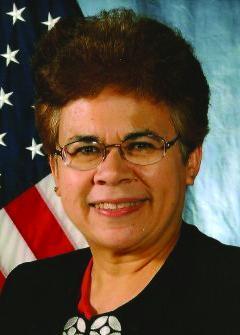
Aurea L. Rivera, P.E., F.NSPE, PMP, PMI-ACP, is the founder of Carbon Metrics Global. Rivera serves as the Central Region director on the NSPE Board of Directors. She seeks to build bridges in engineering through communication and collaboration.
More Featured Articles

NSPE, the American Institute of Architects, and the American Council of Engineering Companies have released the latest annual risk management survey of professional liability insurance carriers.

The United States leads the world in the number of quantum technology startups and global revenues are expected to reach $72 billion by 2035. The technology is still a mystery to the public, but can we solve the unsolvable with the "strangeness" of quantum computing?
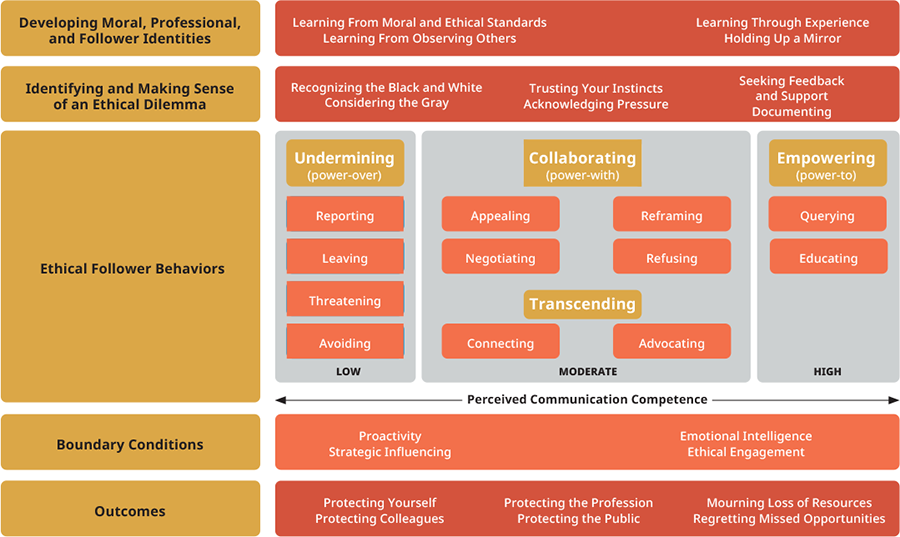
It is important for professional engineers to understand and apply professional ethical standards in their work. While engineers do not struggle to distinguish right from wrong, they face obstacles when trying to influence leaders and their colleagues. A new study offers guidance on how to resist unethical requests and empower others to make the right decision. >>


Licensure exemptions make way for too many engineering projects that are conducted without the direction of PEs—whose paramount responsibility is public protection. The public, which thinks highly of engineers, is not aware that this subjects them to unnecessary risks. There are opportunities for the engineering community to unite to protect the public by reducing or eliminating licensure exemptions. >>

During the height of the COVID pandemic, the level of fear across the globe was unprecedented in living memory. Fortunately, there were a select number of engineers who could help during this time of crisis. Capt. Stephen Martin Jr., Ph.D., P.E., received the 2024 Federal Engineer of the Year Award for using his expertise during the pandemic. >>

The arrival of ChatGPT and other artificial intelligence systems has entered the public consciousness with a vengeance. This new tech is disorienting and raises many questions. How will these systems affect the world of work? Will they take over my job? How will they affect the practice of engineering? An analysis of the introduction of past technologies may offer guidance. >>

DiscoverE has released its latest research on the views of high school students and parents on engineering and engineering careers. The Messages Matter results were encouraging as they reveal that targeted messages and profiles of engineers can spur interest in engineering among the very groups that will ensure a more diverse future for the field. »

NSPE members and professional licensed engineers are stepping up to lead on creating sustainable and resilient communities. This issue of PE magazine offers insight on the role of the engineering community with climate change and puts a spotlight on a Vermont engineering college program that is nationally recognized for its zero energy design focus. »
It’s essential that professional engineers have access to all possible protections from frivolous lawsuits. NSPE pays close attention to proposed legislation, proposed regulations, and court cases affecting the profession. NSPE and state societies take action by reaching out to legislators and agencies to educate and explain the implications of language under consideration. »