

 Registration is open for NSPECon26 in New York City, New York!
 Volunteering at NSPE is a great opportunity to grow your professional network and connect with other leaders in the field.
 Decisions at the ballot box influence policies that support engineering standards and public safety.
United in Protecting Licensing and the Public
Over the past year, NSPE and state societies have responded to several proposals that would have weakened professional licensure standards, altered licensing board oversight, or reduced qualification requirements for public infrastructure leadership roles. While each issue arose in a different state and political context, the common lesson is clear: when professional engineers engage early and speak with credibility, policymakers are better equipped to understand how licensure protects the public.
Through legislative and regulatory engagement, coalition partnerships, grassroots advocacy, and collaboration with state societies and members, NSPE works to ensure the voice of professional engineers is represented when policies affecting the profession are considered. NSPE provides advocacy resources and civic engagement tools and launched the Advocacy Quarterly Newsletter in 2025 to keep members abreast of pertinent legislative and judicial developments and advocacy activities across the country.
The NSPE Federation has demonstrated that when we engage, educate, and present a united front, the engineering profession and the public are better served. Recent advocacy activities offer essential lessons going forward in ensuring the integrity of professional licensure and public safety.
Leadership the Public Deserves
When Hawaii County officials introduced two charter amendments that would have weakened qualification standards for critical public infrastructure roles (Bills 64 and 72), the Hawaii Society of Professional Engineers (NSPE-HI) partnered with NSPE to coordinate a response from local professional engineers, a coalition of allied technical engineering societies and engineering associations, and local chambers of commerce in the fall of 2025.
Bill 64 proposed removing the requirement that the director of public works be a licensed professional engineer and expanded acceptable degrees for the position. Bill 72 sought to revise qualifications for the director of environmental management by removing the requirement for an engineering or related technical degree. Both changes would have reduced the technical judgment guiding decisions that keep communities safe, prevent system failures, and avoid costly mistakes.
A solid grassroots campaign provided the key to making a sound case against supporters of the measures who argued that Hawaii County’s charter requirements were too restrictive and limited the pool of applicants. Ikaika Rodenhurst, P.E., the current House of Delegates representative for NSPE-HI and former Hawaii County public works director, organized local engineers and coordinated testimony. Additionally, he submitted an advocacy column for publication in the Hawaii Tribune-Herald and the Honolulu Civil Beat to help inform residents of the potential impact of the amendments.
In the column he stated: In every community, the roads we drive on, the water we drink, and the systems that manage our waste and protect our environment are the result of careful planning, design, and oversight. These systems don’t build or maintain themselves—they require leadership rooted in technical expertise and public accountability. That’s why the role of director of public works must be held by a licensed engineer.
This isn’t just a matter of credentials. It’s about ensuring that the person responsible for our infrastructure has the education, experience, and ethical commitment to protect public safety and serve the long-term interests of the community.
NSPE-HI President Michael Silva, P.E., F.NSPE, L.S., submitted testimony emphasizing that leadership over public works demands the public protection that is embedded in PE licensure. He also addressed concerns about hiring challenges, and claims of a limited talent pool didn’t withstand scrutiny. According to National Council of Examiners for Engineering and Surveying (NCEES) data, nearly 6,000 licensed professional engineers hold licenses in Hawaii, including more than 3,100 living in the state.
"When communities entrust someone with responsibility for roads, water systems, wastewater infrastructure, and other essential public services, they deserve leadership backed by technical competence and professional accountability," says Mike Silva. "Claims that licensure requirements create an insurmountable workforce barrier are not supported by the available data. Maintaining licensure requirements helps ensure those decisions are made by individuals who have demonstrated the qualifications, experience, and ethical obligations necessary to protect the public."
There is also public backing for professional licensure, even when there are workforce shortages. According to a survey conducted by the Alliance for Responsible Professional Licensing, 64% of voters are outright opposed and believe that lowering licensing standards would fail to solve workforce shortages and increase the risk of licensing under qualified professionals. Voters also believe (36%) that while changing licensing standards might help fill short-term talent gaps, lowering standards would endanger the public and erode public trust long term.
The groundwork paid off when the Hawaii County Council failed to pass both pieces of legislation. Under the county charter, substantially similar measures cannot be reintroduced during the 2024–2026 legislative cycle.
Hawaii is not alone in facing these pressures. Similar proposals have appeared across the country, reflecting a broader national trend toward scaling back technical qualifications for public infrastructure leadership.
In Missouri, a recent decision reaffirmed the importance of professional engineers in leadership roles overseeing public infrastructure. The City of Joplin Charter Review Commission voted unanimously, 9-0, to retain the requirement that the city’s director of public works be a professional licensed engineer in Missouri.
The Missouri Society of Professional Engineers (NSPE-MO) participated in the public process last fall, sharing perspectives on why professional licensure is critical for leadership roles responsible for infrastructure systems and engineering oversight. Members of the NSPE-MO Southwest Chapter also engaged in the discussion, helping ensure that decision-makers understood the importance of maintaining the existing qualification.
In reaching its decision, the commission cited input received during public hearings from stakeholders who provided multiple reasons for keeping the requirement in place. Among those considerations was the role the public works director plays in reviewing contracts and supervising the work of other engineers within the department.
The outcome reflects a broader principle seen in communities across the country: positions responsible for overseeing complex infrastructure systems benefit from leadership grounded in professional engineering licensure and accountability.
The Value of Coordinated Engagement
When House Bill 1060 was introduced in the New Hampshire Legislature earlier this year, the New Hampshire Society of Professional Engineers (NSPE-NH) ensured that lawmakers heard directly from those working in the profession about how licensure standards function in practice and why those safeguards matter.
The legislation was framed as a measure to help address workforce challenges, particularly in rural areas. In practice, the bill would have removed a core safeguard in engineering licensure by eliminating the requirement that an applicant’s engineering experience be obtained under the supervision of a licensed professional engineer. The proposal also removed language allowing the licensing board to determine whether an applicant’s education and experience were satisfactory for professional practice.
NSPE-NH worked closely with NSPE and other industry groups in opposing the legislation and to provide testimony and educate lawmakers on the importance of existing licensure safeguards. NSPE-NH President Chuck Gregory, P.E., testified before the House Executive Departments and Administration Committee, sharing the profession’s perspective on the importance of supervised experience, the professional judgment and ethical responsibility required to take responsible charge of engineering work and board oversight.
Following additional testimony and stakeholder engagement, the New Hampshire House Executive Departments and Administration Committee unanimously recommended that H.B. 1060 be killed and placed the bill on the House Consent Calendar, signaling broad agreement with the recommendation.
Defending the Profession with Credibility and Purpose
In one of the most closely watched state-level challenges, the Nevada Society of Professional Engineers (NSPE-NV)—working in close coordination with NSPE, NCEES, and allied design and licensing organizations—mounted a unified defense to preserve the independence of Nevada’s engineering and other professional licensing boards. The effort was a direct response to a broader initiative by Nevada’s governor to "streamline" state government and reduce bureaucracy—an objective shared by many, though the proposals targeting licensing boards were widely viewed as a misguided application of that goal.
The 2025 Nevada legislative session opened with a sweeping proposal (S.B. 78) to consolidate multiple professional licensing boards, including the Nevada Board of Professional Engineers and Land Surveyors (PELS), under a new entity overseen by the Department of Business and Industry (B&I).
The PELS stands out as a model of effective, lean oversight. With just nine volunteer board members and six full-time staff, the board regulates more than 10,000 professional engineers and over 600 land surveyors—yet fewer than 0.1% of licensees are ever the subject of complaints requiring investigation. Nevertheless, PELS was targeted for consolidation under proposals that threatened to dilute its effectiveness and undermine the very standards it upholds.
NSPE-NV was among the first of the licensed professional organizations to respond to this challenge. NSPE-NV President Martin Jensen, P.E., submitted a formal letter to the Senate Revenue and Economic Development Committee, spoke out on behalf of PEs across Nevada to underscore the importance of board independence. David James, Ph.D., P.E., F.NSPE, led strategic briefings, and helped educate both NSPE-NV and PELS members on the legislation’s implications in addition to providing in-depth testimony. Craig Sisco, P.E., F.NSPE, a past president of NSPENV, was integral in establishing and maintaining coordination between the organizations and supported multiple grassroots initiatives and direct engagement with legislators.
"Most people never interact with a licensing board, but they benefit from its work every day. Independent boards help ensure that the professionals responsible for designing roads, buildings, water systems, and other critical infrastructure have met the standards necessary to protect the public," says Martin Jensen.
NSPE-NV members led the debate and showed what it means to defend the profession with clarity, credibility, and purpose. A coalition, with support from NSPE, successfully pushed back against actions aimed at centralizing oversight and restructuring board governance. This outcome was the result of months of determined advocacy, sharp coordination with PELS, and a united front of engineers, architects, and other licensed professionals.
The perspective of those responsible for protecting public safety carries significant weight with policymakers. When professional engineers, state societies, licensing board members, and allied organizations work together, they bring credibility, technical expertise, and practical perspective to policy discussions. When challenges arise across this nation, these mobilization efforts have protected board independence and reinforced the important role licensure plays in our daily lives.
STAY ELECTION READY: KNOW BEFORE YOU VOTE
An informed and engaged electorate plays an important role in the public policy process. NSPE offers nonpartisan election resources designed to help members prepare for upcoming federal, state, and local elections.
The Election Information and Resources page on the NSPE website gives you access to practical tools to help navigate the voting process, including links to verify voter registration, register to vote, and find key election information such as registration deadlines, polling locations, and guidance for military and overseas voters.
As part of the effort, NSPE will also send periodic email reminders ahead of key voter registration and election deadlines in each state so members have important information before cutoff dates.
The initiative focuses on civic participation and does not promote or endorse candidates or political parties. The resource page is available through NSPE’s Advocacy Center and will be updated as additional election information becomes available.
SPEAK UP AND SHARE YOUR EXPERTISE
NSPE members can have a powerful impact on critical issues faced in our nation with important conversations with elected officials. Whether speaking with a member of Congress or their staff, these conversations give engineers an opportunity to share technical insight and answer questions in a way that feels natural rather than scripted. These interactions help build familiarity and trust, and even brief exchanges can position engineers as reliable resources who understand how federal decisions affect public safety and the communities they serve.
When engineers are part of these discussions, elected officials gain a clearer picture of how federal policies shape the systems people rely on, from bridges and drinking water to energy grids and chemical safety. When that perspective is missing, important technical considerations can be overlooked.
Anyone who wants federal decisions to match the realities engineers see every day can make a meaningful contribution. Schedule a meeting with your representative through NSPE’s Advocacy Portal.
Philip Giles is NSPE’s Senior Manager, Government Relations and Advocacy.
More Cover Story Articles
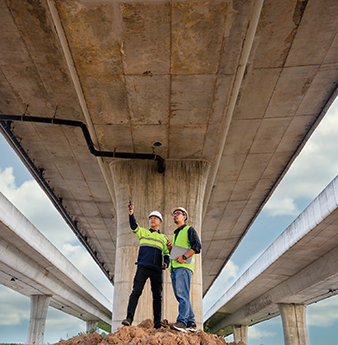
The safety of America’s highways rests on a foundation of professional collaboration. Professional engineers design critical infrastructure and engineering technicians and inspectors, certified by NICET, ensure those designs are executed with precision.


With increasing cyberthreat, it’s imperative that engineers embed cybersecurity principles into their design processes from the outset. This means thinking beyond traditional design parameters and building for resilience, survivability, and operational integrity.

The engineering profession is evolving at an unprecedented pace. New technologies are reshaping industries, sustainability is no longer optional, and the workforce itself is transforming. So, what does this mean for the engineers leading the way?

Creating a diverse and welcoming environment is essential for the engineering profession to thrive. NSPE recognizes that fostering inclusivity and valuing unique perspectives enriches our community, drives innovation, and ensures the public can trust the decisions impacting their lives. Read more.

Read any leadership book or article and you will usually find tips and tricks for success. Yet seldom do you see, “Here is how we failed, and it was awesome!” People often want to avoid the pain and real-life consequences of failure. Yet, failure can be a valuable source of learning and innovation. Read more.


The ability to build meaningful connections is an essential skill for all leaders. To foster courageous communication and connections not only speaks to leaders leaning into conversations but it also points to a leader’s role in creating an environment where honest communication can even exist. Read more.


When faced with a new technical or nontechnical problem, where can engineers look for solutions? Fortunately, there are many tools available to help generate new ideas. Engineers should look to biomimicry and other “fresh-thinking” tools to develop innovative solutions. Read more.