Registration is open for NSPECon26 in New York City, New York!
 Volunteering at NSPE is a great opportunity to grow your professional network and connect with other leaders in the field.
 Decisions at the ballot box influence policies that support engineering standards and public safety.
November/December 2019
Communities: Construction
Construction Industry Players Aim to Reduce Embodied Carbon Emissions
While construction industry efforts to increase energy efficiency and renewable energy production are trending up, the industry is also paying more attention to the greenhouse gases emitted throughout the life cycle of buildings.
So-called embodied carbon is the sum impact of all the greenhouse gas emissions attributed to the extraction of materials, to manufacturing, to construction, to maintenance, and ultimately to the disposal of buildings. The topic has increasingly found its way into the conversations of government and environmental organizations as well as design and engineering firms concerned with sustainability.
Setting a Goal
According to data from the UN Environment Programme, 11% of global greenhouse gas emissions comes from the manufacture of building materials. That does not include operational emissions, which account for another 28%.
In September, as part of the 10th annual World Green Building Week, the World Green Building Council issued a goal for buildings and infrastructure around the world:
- By 2030, all new buildings, infrastructure, and renovations will have at least 40% less embodied carbon with significant upfront carbon reduction, and all new buildings will have net zero operational carbon.
- By 2050, new buildings, infrastructure, and renovations will have net zero embodied carbon, and all buildings, including existing buildings, must have net zero operational carbon.
To achieve this, project teams in building and construction must first identify materials or systems that contribute the most to a building’s embodied greenhouse gas emissions, according to the World Green Building Council’s report, Bringing Embodied Carbon Upfront. The most common and widely accepted method of determining that is by conducting a life-cycle assessment (LCA).
Assessing Embodied Carbon
In May, the Charles Pankow Foundation, which encourages industry collaboration and research to benefit building design and construction, teamed up with construction firm Skanska USA and the Oregon Department of Environmental Quality to release three reports. They provide guidance to building owners, developers, designers, engineers, and contractors interested in considering embodied carbon in mechanical, electrical, and plumbing systems.
The reports compile results from national and worldwide studies of building materials to compare carbon emissions throughout the different materials’ lifespans.
The project, which will create an LCA practice guide and set embodied carbon benchmarks for buildings, provides a pathway for those wishing to integrate embodied carbon into life cycle-based decisions.
The Bath Inventory of Carbon and Energy is another source of embodied carbon data, although its data is specific to the UK. However, a new resource, the Quartz Common Products Database, provides basic environmental-impact and health-related data on 102 common building materials, which is specific to the US.
The only way to know how one material or system compares to another in the context of a building project is to use whole-building life-cycle assessment, or WBLCA. This process looks at multiple impacts of building materials, including global warming potential, over their entire life cycle.
Although WBLCA requires specialized software and training, the software is designed for use by building professionals. The software can also be used to conduct more limited studies, like comparisons of different structural systems. Studies like these can be vital to reducing the embodied carbon of a building because they allow designers to view multiple ways to solve problems.
Selecting Materials
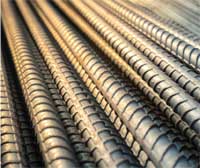 Many life-cycle assessments have taught those in the green building community that structural systems make up most of a building’s embodied carbon. Concrete, steel, wood, and other materials can be optimized to reduce emissions, and having a licensed structural engineer on the team can be a vital asset to ensure the best materials are used for different construction projects.
For example, many firms and projects that conduct life-cycle assessments find that working with a structural engineer can ensure a project is using only as much concrete as is necessary, and finding performance-based concrete specifications that meet environmental requirements goes a long way in reducing emissions overall.
Concrete’s large carbon footprint comes from the carbon-emitting process used to make one of its most important ingredients—the binder portland cement. Some estimates gauge portland cement as being responsible for 5% of total global CO2 emissions.
Steel is another major contributor to the embodied carbon footprint. According to the World Steel Association, the steel industry generates 7%–9% of direct emissions from the global use of fossil fuel. When using steel on a project, team members should specify recycled steel and steel from North America, which generally has a lower carbon footprint than steel from overseas. And while there is some debate in the sustainable construction community, it is generally recognized that building with wood instead of concrete or steel has major carbon-reduction benefits as well.