

 Registration is open for NSPECon26 in New York City, New York!
 Volunteering at NSPE is a great opportunity to grow your professional network and connect with other leaders in the field.
 Decisions at the ballot box influence policies that support engineering standards and public safety.
January/February 2018
Communities: Construction
Combining Steel, Timber Comes With Benefits, Report Finds
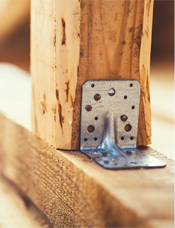 Steel and timber structural systems could be viable in the mid- and high-rise residential building sector, according to a new report by the American Institute of Steel Construction and Skidmore, Owings & Merrill LLP. The study concluded that the system can support marketable and serviceable residential units, is efficient in construction, and has a comparative overall project cost.
The building studied in the report is a nine-story residential building in California, designed by SOM. The building consists of structural steel columns and beams that support a cross-laminated timber floor system.
The elements used in construction were prefabricated and were able to be constructed faster than a concrete building. This factor saved costs by reducing the amount of time spent building and increasing the speed to market, which increased revenues.
The report also found that this type of building is typically only 65% of the weight of a comparable concrete framed building; this reduces foundation costs, seismic loading, and construction time. On average, the overall system cost is within 10% of the cost of a concrete-framed structure, depending on project specifics and current market conditions.
Mid- and high-rise residential buildings take up a large portion of the construction market, yet the design and engineering of these buildings requires new solutions due to the unique constraints not found in other types of commercial construction, according to AISC. The environmental and economic benefits of wood as a building material are tempting for both builders and consumers.
In recent years, the use of timber in the design of tall buildings has been gaining attention from owners and designers. Europe has already found success in using wood as a primary material in both low- and mid-rise buildings, and there has been an effort to research and implement structural wood products in the US. For example, the Department of Agriculture, in partnership with the Softwood Lumber Board and the Binational Softwood Lumber Council, launched a funding initiative to support the design and construction of tall wood buildings in the US. Groups like the TallWood Design Institute, a collaboration between Oregon State University and the University of Oregon, conduct research needed for widespread adoption of mass timber building technology.
“Timber is a new technology, at least in North America,” says Benton Johnson, P.E., a senior structural engineer at SOM. “Right now, part of the challenge is looking at manufacturers and stock. It’s rapidly, rapidly evolving. And so we think it’s really important to keep our eye on the technology and make sure we are using it to its biggest advantage, but not forgetting how it can be combined with other systems, like structural steel, to really play to the strengths of both materials and open up new market opportunities for structural steel.”
More PE Community: Construction Articles

September/October 2017