Registration is open for NSPECon26 in New York City, New York!
 Volunteering at NSPE is a great opportunity to grow your professional network and connect with other leaders in the field.
 Decisions at the ballot box influence policies that support engineering standards and public safety.
May/June 2018
On Ethics
Architects Take Ethical Stand on Workplace Sexual Harassment and Gender Bias
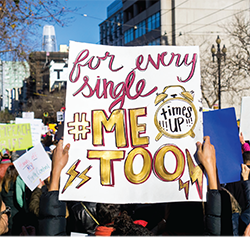 The #MeToo and #TimesUp movements have put a spotlight on sexual harassment and sexual abuse in the film and tech industries and the challenges that women face in the workplace. But sexual harassment and misconduct is not just a Hollywood or Silicon Valley problem—no industry or profession is immune. To address these workplace culture issues, the American Institute of Architects released a values and commitment statement on combatting harassment. The institute also announced plans to update its code of ethics and develop a guide for equitable practices.
AIA issued the following summary of resources and actions it will take to eliminate sexual harassment and assault in the industry:
We commit to our responsibility as AIA members. Architects understand what it means to strive for excellence in the buildings we design. It is time for all AIA members to work together to make our workplaces excellent. The AIA commits to educating all members on sexual harassment and gender bias.
We commit to our responsibility as AIA components. The AIA network at the national, state, and local levels must work together to make sexual harassment a thing of the past. The AIA commits to adopting sexual harassment policies in all components and training for all AIA leaders and component staff.
We will promote exemplary workplace practices. There are exemplary firms whose practices deserve recognition. The AIA commits to launching a firm recognition program that celebrates and promotes exemplary firm culture and equity practices.
We will change workplace culture. The architectural profession must become a role model for safe, healthy, and equitable work environments. The AIA commits to preparing and distributing equitable workplace best-practices guides for all firms.
We will uphold our professional ethics. All AIA members are bound by the AIA Code of Ethics and Professional Conduct. The AIA’s National Ethics Council has been directed by the AIA Board of Directors to recommend updates to the Code of Ethics to address sexual harassment and other equitable workplace principles.
We are committed to a declaration for national awards. The AIA commits to requiring all nominees to AIA national awards to sign a declaration that certifies adherence to the tenets of the Code of Ethics.
We will promote collaboration in the architectural, engineering, and construction industries. The AIA commits to work with colleagues in the American Institute of Architecture Students, the Association of Collegiate Schools of Architecture, the National Council of Architectural Registration Boards, the National Architectural Accrediting Board, and related organizations in the engineering and construction fields to fully address sexual harassment throughout the construction industry.
Gender Bias and Sexual Harassment in Engineering
The issues of gender bias and sexual harassment in the engineering workplace took center stage in the May/June 2017 issue of PE. The feature “Crossing the Line” highlighted how despite efforts to encourage more women to try engineering and other STEM fields, they still face sexism and unwanted sexual advances at some point during their careers.
PE conducted a nonscientific survey of NSPE members about their experience with workplace bias and sexual harassment. The survey used the definition of sexual harassment as “unwelcome conduct of a sexual nature. Sexual harassment can include unwelcome sexual advances, requests for sexual favors, and other verbal, nonverbal, or physical conduct of a sexual nature.” In the engineering workplace, 34% of all survey participants (both men and women) acknowledged that they have witnessed sexual harassment, while 45% of women who participated in the survey stated that they had witnessed harassment. Fifteen percent of all survey participants said that they had personally experienced sexual harassment, while 52% of women said they had experienced sexual harassment. Sixty-eight percent of all survey respondents stated that they had participated in training to address sexual harassment.
While the NSPE Code of Ethics doesn’t explicitly address sexual harassment, it advises professional engineers in Section 1.6 that “Engineers in the fulfillment of their professional duties shall conduct themselves honorably, responsibly, ethically, and lawfully so as to enhance the honor, reputation, and usefulness of the profession.”
In July 2017, NSPE issued a policy (NSPE Professional Policy No. 174) to emphasize its commitment to creating a diverse and welcoming environment for everyone interested in the licensed practice of engineering. “Diverse backgrounds foster unique contributions and capabilities and create an inclusive community ultimately leading to a more creative, effective and technically respected community,” the policy states. “NSPE proactively encourages diversity in all areas of the engineering profession and within the organization. NSPE’s business entities and volunteer groups are committed to developing business practices and position statements in support of this policy.”