

 Registration is open for NSPECon26 in New York City, New York!
 Volunteering at NSPE is a great opportunity to grow your professional network and connect with other leaders in the field.
 Decisions at the ballot box influence policies that support engineering standards and public safety.
The architecture, engineering, and construction (AEC) industry has long faced skilled workforce shortages. Given the visible and positive societal impact the AEC industry has upon the built and natural environment in virtually every community in this country, the gap between needed and available resources is disappointing. We have a great mission and purpose: how do we secure talent for the future?
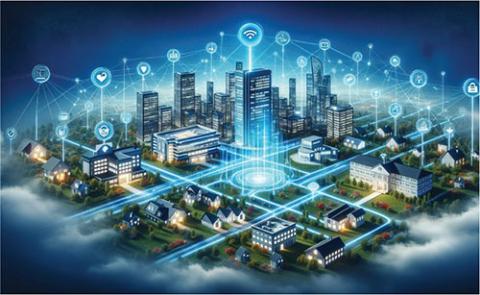
In late 2025, the American Council of Engineering Companies Research Institute released a landmark study on the workforce of the future. It quantified a structural gap that continues to widen, noting a decline of more than 10,000 engineering graduates since 2019, while approximately 184,000 engineers exit the workforce each year.
Generational change and a wave of retirements are contributors, as is a broader dip in college enrollment (Two Demographic Cliffs? How and Why to Diversify Revenue Streams, a blog published by RNL, which provides research on higher education). Regulatory and engineering licensing frameworks also play a role in limiting mobility. For example, my team recently welcomed an engineer from Australia with deep expertise in desalination as a tool for drought-stricken US states. While his experience is invaluable, the intricate process involved time, costs and paperwork that might have been too daunting for him to manage on his own or with a smaller firm.
Yet these structural challenges only tell part of the story. A critical issue is how the AEC profession is perceived by the next generation. Has the industry largely created its own skills gap by falling out of step with what motivates younger professionals?
Purpose, Perception, and Choice
Countless surveys show that a sizeable percentage of today’s workforce prioritize purpose-driven work (Youth Pulse 2026: Insights From the Next Generation for a Changing World, a World Economic Forum report), a rate that is particularly striking among Millennials and Gen Z.
Engineering, by contrast, is too often framed narrowly around credentials, processes and tradition. That framing can obscure the reality of what engineers do and why their work matters.
Research shows that tech firms have been drawing engineers away from traditional engineering employers, particularly among early and mid career professionals. Young people are choosing tech because those roles are seen as offering higher starting salaries and clearer early career progression. The tech sector is also attractive to mid-career AEC professionals who see tech companies as faster, more progressive in work styles and more flexible in advancement. Tech aligns closely with young people’s lived experience in a digital first world and is often viewed as inclusive and adaptable, with multiple entry points (The Rise of Nontraditional Tech Career Paths published on dice.com) and fewer rigid pathways.
Engineering as a Career in the Age of AI
Engineering stands out as one of the most compelling career paths at a time when AI is rapidly reshaping industries.
As WSP Global President and CEO Alexandre L’Heureux has noted, the company’s work operates primarily in the physical world rather than the virtual domains where many other businesses concentrate.
Engineering represents service to our clients that blends advanced domain expertise, inherent know how, technical analysis, field execution and professional judgment, informed by massive amounts of proprietary data, knowledge and experience that are not publicly available. These capabilities cannot be separated from the real environments in which infrastructure must function.
This distinction is critical in the age of AI. Bridges, transit systems, water treatment plants, energy facilities and environmental systems must perform safely under changing conditions, meet regulatory requirements and endure for decades.
AI can and will enhance analysis, accelerate design and support better decision making. However, engineers remain accountable for results in ways that are fundamentally different from roles centered in virtual or advisory domains
Promoting Our Profession
To make the professional engineering field attractive, it may help to rethink how we define and promote our industry. When we talk about what it means to be a professional engineer (PE), let’s go beyond the "what" and "how" of traditional engineering skills, which are grounded in facts and rules. I believe it is essential to lead with dynamic definitions of "why" our works matters. We all have a role to play in promoting our profession, fostering and sustaining interest through communities of practice, mentoring and by modeling life-long learning.
Infrastructure is the physical substrate of the digital world, from the power grids feeding advanced manufacturing and data centers to the growing smart transportation networks. Demonstrating that PEs are society’s "systems architects" can help attract the cross-disciplinary talent we need. Framing engineering in this way helps bridge the perceived gap between tech and AEC. It shows that engineering is not separate from innovation; rather engineering in the AEC space is central to innovation and enabling a new, efficient society.
No matter how compelling the message is, it won’t matter if it isn’t heard. Early exposure matters, and engineers may be a bit too humble and a bit too technical to adequately promote their achievements and interesting nature of their contributions. When introduced to multiple STEM-related topics in classrooms, students are 5.3 times more likely to be employed in a STEM career (Voices of Gen Z: Perspectives on STEM Education and Careers report by Gallup and the Walton Family Foundation). That is one reason why there have been calls to make engineering a requirement for every US high school student. That could be tremendously helpful, although the hard truth is that’s likely not enough.
Foster Connections to Enhance Retention
Connection is critical at every stage of a career, and the International Coalition for Sustainable Infrastructure has pointed to particular benefits of highly collaborative communities of practice. PEs should connect with peers through professional associations and seek interdisciplinary connections.
For example, grassroots leaders at WSP run 140 global Practice Area Networks that facilitate knowledge-sharing across geographies and sectors to solve real-time challenges such as managing project timing, budgets and risks.
We also need to enhance retention. People often stay or leave because of other people they work with, most especially their direct supervisor and their surrounding project teams and collaborators. To foster connections, particularly across generations, we created a dedicated program that includes everything from virtual coffee breaks and bi-monthly meetups to matching mentors and mentees across disciplines and locations based on career ambitions and interests, backed by mentoring handbooks, conversation guides and career development templates.
Retention is shaped by practical considerations. Flexible work arrangements, modern tools, consistent upskilling and visible growth paths all matter.
A Profession Worth Choosing
The infrastructure skills gap is often described as a numbers problem, but it’s also a narrative problem. The AEC industry has struggled because we have not always told our story in ways that resonate with how the next generation evaluates opportunity, purpose and security.
Redefining our profession for the next generation does not mean abandoning rigor or tradition. It means modernizing how we communicate impact, opening clearer and more flexible pathways into the field and helping young people see themselves in engineering earlier and more vividly. We must show that engineering is not a legacy career, but a futureproof one.
If we get this right, we do more than close a workforce gap. We invite the next generation to take part in essential work to shape a safer, more resilient and sustainable world. That is a message worth hearing and a profession worth choosing.

Joseph Sczurko, P.E., president of WSP in the US, brings more than 35 years of leadership experience and a deep understanding of the AEC industry to meet evolving client needs.
More PE Community: Private Practice Articles
As organizations pursue environmental and sustainability goals, engineers are often brought into projects to provide technical expertise; they may model scenarios, or estimate benefits.

In an era defined by persistent labor shortages, generational change and heightened employee expe

How One Midwestern Firm Turns Culture into Strategy

While the AEC industry long ago shifted from drafting tables to design software to develop digita

Each year, the American Institute of Architects (AIA), the American Council of Engineering Compan

With architecture and engineering unemployment at just 2%, the civil engineering industry continu



Summer 2023