

 Registration is open for NSPECon26 in New York City, New York!
 Volunteering at NSPE is a great opportunity to grow your professional network and connect with other leaders in the field.
 Decisions at the ballot box influence policies that support engineering standards and public safety.
May/June 2020
PE Report
When Buildings Reopen, Will Water Be Safe?
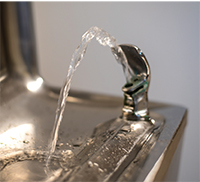 While restaurants, gyms, schools, and other buildings are closed indefinitely to prevent the spread of Covid-19, water left sitting in pipes could change in quality. Now researchers at Purdue University are conducting a field study to determine whether that water left sitting for long periods of time could contain excessive amounts of heavy metals and pathogens concentrated in pipes nationwide.
Stagnant water would not be a problem just for buildings recently closed down. Water could have been bad for months or years in old hospital buildings that cities are reopening to accommodate a potential influx of coronavirus patients.
“We don’t design buildings to be shut down for months. This study focuses on the consequences and could help building owners make sure that their buildings are safe and operational when occupants return,” says Andrew Whelton, a Purdue associate professor of civil engineering and environmental and ecological engineering.
The researchers began their study upon receiving funding by the National Science Foundation’s Rapid Response Research program only three days after applying. The study involves monitoring water quality in buildings both during a period of extended vacancy and when occupants have returned.
This field study is part of a national effort to advise public health officials, building owners and water utilities on how to safely recommission buildings with low or no occupancy due to the pandemic.
Whelton and other researchers across the US have begun drafting recommendations compiled by this effort in a paper pending publication. Collaborating with Purdue in this effort are experts from leading plumbing safety scientists and engineers from Virginia Tech, Legionella Risk Management Inc., Arizona State University, the University of Memphis, the University of Iowa, Northeastern University, and Polytechnique Montréal in Canada.
The recommendations are based on implications from other studies of water stagnation in large buildings. Whelton’s team also worked with the American Water Works Association to publish a set of building recommission guidelines and provided guidance to a pandemic response in Detroit as the city worked to restore water service to thousands of households that had been shut off due to inability to pay.
But since no study has been conducted on widespread, long-term building closures, knowledge gaps remain on how to best maintain stable water quality during a shutdown. The field study led by Whelton’s team would be a start to filling these gaps.
“We’re not going to have all the science done at the end of this study,” Whelton says. “But part of what we’re trying to do is put energy toward helping others develop guidelines so that they can at least go in and start recovering their buildings.”
More PE Report Articles
March/April 2020