

 Registration is open for NSPECon26 in New York City, New York!
 Volunteering at NSPE is a great opportunity to grow your professional network and connect with other leaders in the field.
 Decisions at the ballot box influence policies that support engineering standards and public safety.
January/February 2020
NSPE Today
NICET Certification To Help Ensure Water Infrastructure Quality
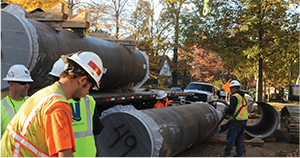 REHABILITATION OF A 48-INCH CAST IRON WATER MAIN INSTALLED ALONG EASTERN PARKWAY IN LOUISVILLE, KENTUCKY, FROM 1923 TO 1930. THE WATER MAIN IS BEING RENEWED BY SLIP-LINING A 42-INCH CEMENT-LINED STEEL PIPE INSIDE THE EXISTING CAST IRON PIPELINE.
CREDIT: LOUISVILLE WATER COMPANY
Water infrastructure is showing its age. Many underground pipes, for example, are nearing the end of their useful lives and need repair or replacement. For engineers working on such projects, certified technicians can be important collaborators. As inspectors, they serve as PEs’ “eyes and ears” in the field to help ensure projects are carried out to their specifications.
The National Institute for Certification in Engineering Technologies, a division of NSPE, is the global leader in providing certifications for these “hands-on” members of the engineering team. NICET certifications provide confidence to owners such as utilities, as well as their engineer employees and consultants, that qualified individuals are inspecting the implementation of designs.
In 2017, however, NICET had sunset its underground utilities construction program, adding no new certificants. Demand among applicants was low. “We need more folks on [these] career paths,” says Jim Wathen, P.E., F.NSPE, NICET’s director of business development. The NICET board of directors had to make a decision. As Wathen puts it, “Does the world demand this kind of certification, and how can we establish that?”
A national study conducted in partnership with the American Water Works Association helped confirm that it was worthwhile to redevelop the certification, moving it from a pencil-based to a computer-based test. AWWA surveyed almost 4,000 members, including those working as engineers, manufacturers, and contractors in water, wastewater, and stormwater. Key findings: an expected shortage of qualified technicians and issues of quality work and experience among contractors. Ninety percent of respondents felt that they would benefit from certified technicians.
Having these certified technicians serve as inspectors, Wathen says, “is critical to allow the owners to have some satisfaction…that their projects are going to go in as a quality project that will last.” The technician is a valued member of the team who can observe the process from the delivery of construction materials onsite to the way the project is built, he explains. And, he adds, utility owners realize that ensuring projects are done right the first time also reduces maintenance costs.
After making its decision to relaunch the program, NICET began gathering subject-matter experts to develop the new tests. NICET is aiming to launch the certification in the third quarter of 2020. Three levels of the underground utilities certification program will be available initially, beginning with a focus on inspection of water, stormwater, and sanitary systems. A fourth level of certification may be later added, and the program can be expanded to cover other underground utilities such as gas and electricity, based on demand.
Once launched, promotion will be critical, Wathen says, to make sure that people who are expressing concerns about quality projects know that “NICET has an answer for you.”
Greg Heitzman, P.E., is major advocate for the program. The 40-year veteran of the water and wastewater industries built NICET requirements into job descriptions for internal inspectors and contractors when he served as chief engineer at the Louisville (Kentucky) Water Company. He later served as both president of the Louisville Water Company and executive director of the Louisville/Jefferson County Metropolitan Sewer District.
Heitzman explains that NICET certification is essentially an extension of the licensed professional’s expertise, by ensuring that a qualified person is in the field each day inspecting the work of construction contractors.
He also points out the importance of the inspector serving as an independent third party, hired by the consultant or utility—not the contractor. NICET-certified technicians follow a code of ethics similar to that of licensed professional engineers.
Overall, having certified technicians as part of the team, Heitzman says, ensures that “our infrastructure is built to last its intended life and meets defined performance standards.”
How to Help
NICET is soliciting subject-matter experts from the underground utilities industry to write and review test questions for certification exams. NICET also needs additional individuals with various backgrounds and experience levels to provide ratings for each of the test questions. PE help is requested, and work can be done remotely. Interested? Email [email protected].
More NSPE Now Articles

September/October 2019