

 Registration is open for NSPECon26 in New York City, New York!
 Volunteering at NSPE is a great opportunity to grow your professional network and connect with other leaders in the field.
 Decisions at the ballot box influence policies that support engineering standards and public safety.
March/April 2017
Communities: Industry
Group Begins Work on Additive Manufacturing Standards
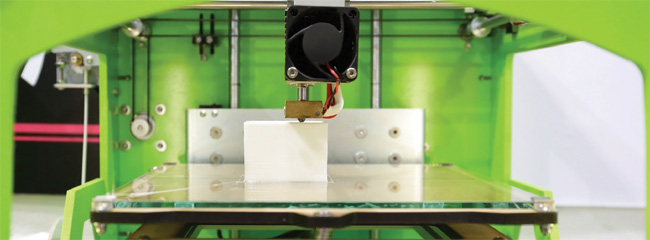
While additive manufacturing, also known as 3D printing, is enjoying a boom, the rapidly expanding interest and technology has had the less advantageous consequence of leaving significant gaps in additive manufacturing standards.
“Simply put, standards really need to be developed,” says John Ralls, P.E., engineering manager with Newport News Shipbuilding, the sole designer, builder, and refueler of US Navy aircraft carriers and one of two providers of US Navy submarines. In Virginia, Ralls oversees a team of engineers that researches additive manufacturing, welding, electrical engineering, and other issues.
Technological advances by original equipment manufacturers (OEMs) are outpacing the development of standards. As a result, engineers can be forced to collect the data needed to develop a baseline of acceptability and ethically practice their profession themselves.
Engineering ethics is an area of concern for Ralls, particularly the engineer’s obligation to society to ensure the safety of what they make. “The challenge then comes from the appeal of additive manufacturing—you have something that’s nice and flashy and new and can have benefits, but if you don’t employ the right level of rigor you might not fully understand the material properties of what you were making,” he says.
Ralls’ concerns go beyond just the manufactured products. Engineers, especially facilities engineers, have to consider a host of new hazards for those working with the equipment without robust standards in place.
“When you’re pouring hot metal in a casting for example, you know what you’re doing,” he says. “But when you’re dealing with additive manufacturing, just the process itself brings new hazards from exposure. You’re dealing with potential electron beams, lasers, or other OEM-specific conditions.”
In the meantime, for its part, Newport News Shipbuilding is applying its technical rigor to thoroughly understand its additive manufacturing equipment and products. But the gaps in standards have not gone unnoticed by the industry as a whole or by academia and government.
At the end of February, a group comprising America Makes, the National Additive Manufacturing Innovation Institute, and the American National Standards Institute was scheduled to publish a standardization roadmap. In March 2016, the three organizations formed the Additive Manufacturing Standardization Collaborative to coordinate and accelerate the development of industry-wide additive manufacturing standards. The roadmap provides an assessment of gaps in current standards and recommendations for closing them.
According to Jim McCabe, senior director of standards facilitation with ANSI, there was a two-fold goal: determine the standards that have been published or are in development, and then bring together stakeholders from industry, government, and academia to see what was missed.
The publishers of the roadmap hope that their work will help the industry and other stakeholders make better decisions and better allocate resources to research and development of future industry-wide standards. Following publication of the roadmap, the Society of Manufacturing Engineers will host a forum May 9 at additive manufacturing convention RAPID+TCT with participating standards developing organizations as part of the effort to recruit more volunteers to develop the standards.
“We definitely look forward to the day when I can go flip through a standards book and have some more detail to point to, but until then we’re basically working through that challenge just like everyone else in the industry,” Ralls says. “Hopefully, one day, we’ll all be there, but that only comes with the right level of rigor and ensuring we keep things like ethics and safety at the forefront of our thoughts.”
More PE Community: Industry Articles
November/December 2016