

 Registration is open for NSPECon26 in New York City, New York!
 Volunteering at NSPE is a great opportunity to grow your professional network and connect with other leaders in the field.
 Decisions at the ballot box influence policies that support engineering standards and public safety.
March/April 2017
PE Report
Blindness Prevention Technology, ‘Whole-Brain’ Education Capture NAE Awards
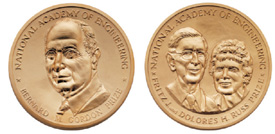 The National Academy of Engineering recently announced the winners of the Fritz J. and Dolores H. Russ Prize for engineering achievements aimed at improving the human condition and the Bernard M. Gordon Prize for innovation in engineering and technology education.
Saving Your Sight
The invention of optical coherence tomography, which harnesses engineering technology to help prevent and treat diseases that cause blindness, has earned James Fujimoto, Adolf Fercher, Christoph Hitzenberger, David Huang, and Eric Swanson recognition with the Fritz J. and Dolores H. Russ Prize. The biennial prize, which honors bioengineering achievements that improve the human condition, was scheduled to be awarded during a gala dinner event in Washington, D.C., in February.
Optical coherence tomography (OCT) is one of the most widely used technologies for imaging the human eye and serves as a tool for treating diseases such as macular degeneration, glaucoma, and diabetic retinopathy. This technology has helped diagnose millions of patients with eye disease at early, treatable stages by using light waves to perform high-speed, micrometer-resolution, three-dimensional images of tissue microstructure. Optical coherence tomography has also contributed to the understanding of disease mechanisms and their treatments in the areas of ophthalmology, cardiology, and cancer.
 James Fujimoto and his team invented and developed OCT; he is also the cofounder of Advanced Ophthalmic Devices and LightLab Imaging, which developed cardiovascular OCT. Fujimoto is the Elihu Thomson Professor of Electrical Engineering and Computer Science at the Massachusetts Institute of Technology and a visiting professor of ophthalmology at Tufts University School of Medicine.
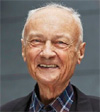 Adolf Fercher demonstrated the first measurement of the axial length of a human eye using low-coherence interferometry (1986) and of the first retinal OCT images of the living human eye (1993), and is the “intellectual father” of the first commercial low-coherence interferometry ocular biometry system. He is a professor emeritus at the Institute of Medical Physics at the Medical University of Vienna.
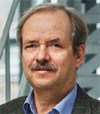 Christoph Hitzenberger is a cofounder of the Medical University of Vienna’s biomedical optics research group and developed the heterodyne low-coherence interferometry (LCI) system for measuring axial eye length and retinal thickness. This work led to the development of the first commercial LCI ocular biometry system. He is vice chair of the Center for Medical Physics and Biomedical Engineering at the Medical University of Vienna.
 David Huang is the coinventor of OCT and has contributed to polarization-sensitive, swept-source, spectroscopic, and anterior eye OCT as well as OCT angiography. He is a professor of biomedical engineering and director of the Center for Ophthalmic Optics and Lasers at the Casey Eye Institute at the Oregon Health and Science University in Portland.
 Eric Swanson participated in the advancement of OCT over the course of 16 years and worked on optical networks and space communication at the MIT Lincoln Laboratory. He is a research affiliate in the Research Laboratory of Electronics at MIT and an affiliate of MIT’s Deshpande Center for Entrepreneurship and Translational Fellows Program.
Merging the Analytical with the Creative
 Julio Ottino, dean of the Robert R. McCormick School of Engineering and Applied Science at Northwestern University, has been awarded the 2017 Bernard M. Gordon Prize for Innovation in Engineering and Technology Education.
Ottino received the $500,000 annual prize for development of the whole-brain engineering program, which focuses on integrating the analytical and technical components of engineering with creativity, design, and divergent thinking throughout the undergraduate and graduate levels.
The Gordon Prize was established in 2001 to recognize experiments in education that foster effective engineering leaders.
The whole-brain engineering approach concentrates on three areas: design, entrepreneurship, and leadership and personal development. The school has developed new courses with other programs and schools on campus that have brought together students from various disciplines. There is also a partnership with the School of Art Institute of Chicago. The dean attributes the new education focus to increasing the number of female students by more than 60%.
Ottino serves as the Distinguished Robert R. McCormick Institute Professor and the Walter P. Murphy Professor of Chemical and Biological Engineering. He is the founder and former director of the Northwestern Institute on Complex Systems.
PHOTO CREDIT: COINS: NATIONAL ACADEMY OF ENGINEERING
More PE Report Articles

March/April 2017
March/April 2017
March/April 2017
November/December 2016