

 Registration is open for NSPECon26 in New York City, New York!
 Volunteering at NSPE is a great opportunity to grow your professional network and connect with other leaders in the field.
 Decisions at the ballot box influence policies that support engineering standards and public safety.
January/February 2017
PE Report
Society Pushes for PE Oversight in California Autonomous Vehicles
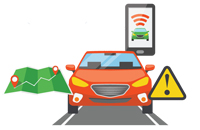 Professional engineers in California should have a key role in ensuring that safety and reliability are major factors in the state’s autonomous vehicle development and deployment, says NSPE.
On November 11, the Society submitted public comment to the California Department of Motor Vehicles regarding the department’s revised draft regulations for the deployment of autonomous vehicles. In the draft regulations, issued in September, the CDMV allows manufacturers and suppliers to self-certify instead of requiring a third-party safety evaluation.
NSPE urges the CDMV to require a professional engineer, internal to the development company, to conduct vehicle demonstration tests. A century of experience demonstrates that protection of public safety is best served when someone in the decision chain does not face pressure from shareholders or nontechnical management to meet budget, project timeline, or sales projections, NSPE emphasizes. The Society adds that a PE is uniquely well-positioned to serve in this capacity.
“The design, development, and deployment of autonomous vehicles should not be treated any differently [than any other design services] and should require the involvement of professional engineers to give the highest level of assurance to the protection of the public health, safety, and welfare,” wrote NSPE President Kodi Verhalen, P.E., Esq., F.NSPE. “The risks posed by failing to adequately address public safety protections are too great to ignore.”
On the federal level, NSPE submitted a public comment to the National Highway Traffic Safety Administration in October calling for greater involvement by professional engineers in NHTSA’s guidelines for the development and deployment of autonomous vehicles.
The Society has urged NHTSA to address critical safety and ethical challenges posed by autonomous vehicles, which were not addressed in the federal automated vehicles policy, by supporting a key role for the professional engineer.
“These guidelines allow manufacturers and suppliers to self-certify, eliminating a critical third-party safety check,” wrote Verhalen. “In the absence of a third-party certification, verification is needed by a licensed professional engineer, internal to the development company. The licensed professional engineer will affix his or her seal to the engineered component, attesting to the conclusion that the design is adequately protective of the public health, safety, and welfare.”
More PE Report Articles
November/December 2016