

 Registration is open for NSPECon26 in New York City, New York!
 Volunteering at NSPE is a great opportunity to grow your professional network and connect with other leaders in the field.
 Decisions at the ballot box influence policies that support engineering standards and public safety.
September/October 2018
PE Report
Society Calls for PE Role Following Deadly Missouri Boat Accident
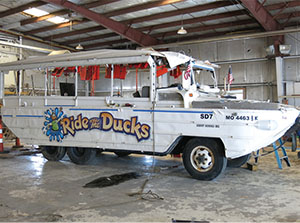
What began as an evening excursion of fun and family time on a “Ride the Ducks” boat ride turned into a nightmare in Branson, Missouri on July 19. Seventeen lives were lost when the boat capsized and sank during a storm on Table Rock Lake. According to a Los Angeles Times report, court documents indicate that the amphibious vehicle (also known as a stretch boat) was designed by an entrepreneur, not an engineer.
While the National Transportation Safety Board’s investigation into this accident continues, NSPE offers condolences to those who lost loved ones and is calling for a critical review into how similar tragedies can be prevented and the potential role for licensed professional engineers to increase safety.
In a letter to US Senator Claire McCaskill on August 6, NSPE President Michael Aitken, P.E., F.NSPE, called attention to court records showing that the boat was designed by an individual with no engineering training, and no structural engineers were consulted when the boat was redesigned to extend its length. He also noted that an attorney representing plaintiffs in a 2015 crash involving a similar vessel assumed that structural engineers were required to design amphibious vehicles.
Aitken wrote: “It is NSPE’s belief that licensed professional engineers with expertise in naval architecture and marine engineering would have a positive impact on the safety of marine vessels and within the marine industry. However, specific qualifications for licensure as a naval architect and marine engineer vary by state. It’s NSPE’s hope that state and federal agencies will seriously consider the importance of the professional engineering license for the design of boats and take appropriate action to implement the necessary changes in the law to mitigate future accidents.”
There is precedent for a PE role in the maritime industry. In 1992, the US Coast Guard issued its Navigation and Inspection Circular, NVIC 10-92, which stated that plans and design calculations submitted to the Coast Guard’s Marine Safety Center must be reviewed by a PE or a full-time employee of the American Bureau of Shipping.
In 1995, the National Council of Examiners for Engineering and Surveying developed and approved a PE exam for professional engineering licensure in naval architecture and marine engineering
More PE Report Articles
July/August 2018