Registration is open for NSPECon26 in New York City, New York!
 Volunteering at NSPE is a great opportunity to grow your professional network and connect with other leaders in the field.
 Decisions at the ballot box influence policies that support engineering standards and public safety.
May/June 2019
PE Report
PSPE Leader Testifies on Climate Change Risk
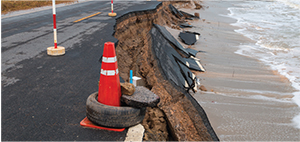 As Pennsylvania develops plans to protect the public from climate change risks, the Pennsylvania Society of Professional Engineers wants to ensure that the PE’s role in addressing critical infrastructure needs are not an afterthought.
On March 28, PSPE Past President Joe Broward, P.E., F.NSPE, testified at a hearing called by Auditor General Eugene DePasquale to assist with completing a report on preparing for the impacts to health, transportation, infrastructure, agriculture, forestry, and tourism due to climate change.
“Although considerable, and in my opinion irrefutable, evidence indicates that the climate is changing, significant uncertainty exists regarding the location, timing, and magnitude of such change over the lifetime of infrastructure,” Broward said in his testimony. “Practicing engineers are faced with the dilemma of balancing future needs for engineering infrastructure with the risks posed by the effects of climate change on long-term engineering projects. The gap between climate science and engineering practice somehow must be bridged.”
During the hearing, Broward also provided perspective on how climate change could affect engineering practice. He explained that civil engineering design has depended on codes, engineering references, maps, graphs, and historical data, which have rarely accounted for future climate variations. Infrastructure design that does not account for future climate change and its effects is inherently at risk, nondurable, and a potential hazard to the public health, safety, and welfare.
Broward outlined several environmental factors related to climate change that can affect infrastructure: the rate of deterioration of concrete structures (bridge abutments, piers, and buildings); flood design related to structures and with respect to waterways; and effects to infrastructure related to higher frequency hurricane residual effects such as high-precipitation storms.
DePasquale believes that climate change will impact the public health and safety, potentially disrupting the state’s economy and creating new burdens on taxpayers. According to a draft action plan released in November 2018, Pennsylvania is expected to experience higher temperatures, changes in precipitation, sea-level rise, more frequent extreme weather events, and flooding due to climate change. Since 1980, the report notes, extreme weather events have cost US governments, citizens, and businesses more than $1.1 trillion. It’s also estimated that climate change will cause 250,000 additional deaths annually between 2030 and 2050 across the globe.