

 Registration is open for NSPECon26 in New York City, New York!
 Volunteering at NSPE is a great opportunity to grow your professional network and connect with other leaders in the field.
 Decisions at the ballot box influence policies that support engineering standards and public safety.
May 2011
Bridging a Divide
Structural engineers want to expand separate licensing of their discipline while NSPE opposes discipline-specific licensure. Is there any way to build a consensus?
BY DANIELLE BOYKIN
Tell Us What You Think:
Should separate licensure for structural engineers be expanded in states that license engineers generally as professional engineers? Do you think that generic licensure alternatives can address the concerns of structural engineering organizations? Share your views with PE at [email protected].
During the NSPE Annual Convention in 2007, a debate took place over licensure, particularly for structural engineers. The question was: Should engineers be licensed generally as PEs, or should they be licensed in their specific engineering discipline? Now in 2011 that debate has been reignited as structural engineers push to expand separate licensing of their discipline in more jurisdictions. NSPE members involved in this debate believe the discussion should focus more on how best to find common ground in the interest of the professional engineering community.
The first PE licensing law was enacted in Wyoming in 1907. Illinois became the first state to establish a structural engineering practice act in 1915, after a building boom that followed the great Chicago fire. California, Hawaii, Idaho, Nebraska, Nevada, New Mexico, Oregon, Utah, and Washington also draw distinctions between structural engineers and professional engineers in other disciplines.
Engineering associations have differing views.
NSPE endorses and supports the concept of licensing engineers only as a "professional engineer" and opposes licensing by designated branches or specialties (NSPE Position Statement No. 1737—Licensure and Qualifications for Practice). The Society, however, doesn't seek to change existing laws in jurisdictions that have structural engineering practice acts and title acts.
The National Council of Structural Engineers Associations (NCSEA) supports the establishment of discipline-specific practice acts for structural engineers in all jurisdictions because the organization believes that general civil engineering education that is not focused specifically on structural design does not provide the knowledge or skills necessary to practice structural engineering and generic licensure does not adequately protect the public.
The American Society of Civil Engineers supports licensure as professional engineers in addition to post-PE credentialing that attests to a licensed engineer's expertise in a civil engineering specialty area.
A Third Rail
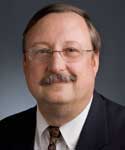 Discussions about generic versus discipline-specific licensure have moved to the forefront again because a new 16-hour structural exam was recently introduced by the National Council of Examiners for Engineering and Surveying, and structural engineers have legislative initiatives in several states that are in different stages. Craig Musselman, P.E., who serves on NSPE's Licensure and Qualifications for Practice Committee, describes this issue as "one of the third rails of engineering licensure" because all interested parties feel very strongly about their position. "Now there's increased demand from structural engineers to take the 16-hour exam, and states that license engineers generically need to make a decision about whether to give the exam, and [they] are grappling with where this fits in respect to licensure," says Musselman.
In April, NCEES began offering the 16-hour structural engineering exam, which requires candidates to take breadth and depth portions on vertical forces and lateral forces. Licensure candidates will no longer be able to take the two-part Structural I and Structural II exams.
NCSEA was part of the committee that studied how structural engineers are practicing across the U.S. and aligned this information with the body of knowledge that needs to be covered in an examination. Susan Jorgensen, P.E., chair of the NCSEA licensing committee, says the NCEES committee was concerned by the lack of exam uniformity. It also wanted to ensure that the exam could adequately determine the depth-and-breadth understanding of structural engineering.
Now that structural engineers are required to do more to get licensed, Jorgensen says there are structural engineers who believe that they at least should be recognized with a separate title. "Beyond that, we believe that for the protection of the public, we should limit the practice of structural engineering to those who practice structural engineering all of the time," says the vice president and managing principal at Leo A. Daly in Denver.
Jorgensen believes that there are some unqualified professionals designing [complex] structures, and the bar needs to be raised. "Frankly, I don't want to wait until we have major failures before we decide to make a change," she says. "I'd rather we be proactive, make the change, and raise the bar for structural engineering long before we start having issues."
As a structural engineer who has previously been licensed as an S.E., NSPE member Skip Lewis, P.E., F.NSPE, understands that there are a lot of gray areas and crossover within engineering disciplines. He also respects the differing views in the debate over separate licensure for structural engineers. "I do have an appreciation for the arguments that are raised by the NCSEA, but it is my opinion that the generic licensure system is the best system for all professional engineers," says Lewis, chairman of H2L Consulting Engineers in Greenville, South Carolina, and member of NSPE's Licensure and Qualifications for Practice Committee.
Lewis is concerned that an increase in discipline-specific licensure may not be in the best interest of professional unity. "I think an engineering profession that is able to speak in a common voice, particularly a large volume of common voices, is certainly more preferable to the fragmented voices that you hear from various discipline-specific interests," he says. "That is particularly true in addressing the political issues of engineering."
Jorgensen views this debate over licensure as something that can be positive in the long run for engineers. "I think it's good for the profession, and more so it's good for the health, safety, and welfare of the public. The more that we ensure that practicing engineers know what they're doing and do a good job of it, the better," she says. "I fully accept that licensing is only one step. If you don't have the proper education to start and you don't have continuing education to keep up with changes in the profession, we're not going to raise the bar."
Jorgensen strongly believes in the need for a separate structural engineering license, but she realizes that there must be a better understanding of all positions on the issue. "Ultimately, the structural engineering community, I believe, is always going to want to have a separate restriction on practice, but that may not be possible or feasible in some locations," she says. "We are willing to talk and come to some agreement."
Jorgensen adds, "We are not out to restrict the practice of anybody, especially those currently practicing, but we want to make sure that as we go forward in the future that our profession gets better, and this is one way to do it."
Finding Common Ground
It will be up to NSPE state societies and NSPE members to decide how to respond to these proposals for separate structural engineering licensure. However, Musselman is convinced that now is the time for discussions to move in a different direction. More focus should be on finding areas of common ground, rather than holding on to divisions. "There should be a way that all of us in the engineering profession can accomplish our goals without having our organizations diametrically opposed," he says.
The NSPE Licensure & Qualifications for Practice Committee has been looking for ways that would enable structural engineers to raise the bar without moving to a discipline-specific licensing system. One alternative is for states that offer only generic licensure to designate specific disciplines on their rosters of licensees. Roster designations are used in many jurisdictions, and Louisiana is using passing of the structural engineering examinations as one criterion in determining the structural designation. The rosters can be used by many disciplines and accomplished by a rule change in some jurisdictions.
In Texas, structural engineers are proposing changes to state law that would establish separate licensure for structural engineering. In a recent post on NSPE's licensure blog, Musselman recommended that the Texas Board of Professional Engineers build on its current use of an online roster, which lists the primary disciplines of PEs licensed in the state, and establish more rigorous criteria to use a structural engineering designation. For example, an engineer who has education and experience of a structural engineer is listed as "STR" on the roster. Musselman says that a compromise would entail the licensing board allowing only PEs who have passed the previous structural engineering exams or the new 16-hour structural engineering exam to use the "STR" listing on the roster.
Last year, the Oklahoma State Board of Registration for Professional Engineers and Land Surveyors proposed statute and rule changes to allow the use of the S.E. designation. A professional engineer must meet one or more required conditions, including passing the 16-hour structural exam; being licensed in good standing in another jurisdiction as an S.E. by examinations beyond the exams required to be licensed as a professional engineer; or passing the NCEES Structural I and Structural II exams. The statute changes would also allow any PE licensed in the state to practice within the structural engineering discipline or refer to him or herself as a "structural engineer" if he or she is competent in this discipline and has indicated this expertise in the board records.
Robert Zahl, P.E., chair of the Oklahoma licensing board, says that the board's goal was to recognize and adequately regulate licensed structural engineers from other jurisdictions. "As a board, we wanted to be able to control someone who came into the state and touted him or herself as an S.E.," he says. "With that in mind, we developed this proposed statute so that we could recognize an S.E. from another state."
The process to expand recognition of structural engineers revealed just how contentious the issue of generic versus discipline-specific licensure can get, says Zahl, a founder of Zahl-Ford Inc., a structural engineering firm in Oklahoma City. "There were engineers that were concerned that the statute change would open the door to separate licensure down the road and that engineers with the S.E. designation would get priority over generically licensed engineers for projects," he recalls.
Zahl says the proposal has been tabled until next year, and the board has no plans to move to discipline-specific licensure. The board, however, still wants to receive input from engineers on this issue, he adds.
Musselman views the Oklahoma board's proposal as a good example of finding common ground. "What Oklahoma is considering is a middle ground that may work because it allows structural engineers who are licensed separately in other states and have passed the 16-hour exam or the previous equivalent exams to use the P.E., S.E. designation in a state that has generic licensure," he says. "There are no practice limitations and there are no title limitations. You are not precluding licensed engineers from calling themselves a structural engineer."
Another potential compromise is post-licensure specialty certification, as in the medical profession. Medical doctors receive a general license from state medical boards after passing the U.S. Medical Licensing Examination. Doctors who want to practice in a particular specialty must gain the experience and knowledge required to pass an examination and meet the approval of the specialty certification board.
Lewis believes that a form of board certification could address the concerns of structural engineers. "I do believe that when you get into complex building structures, given the criticality of structural integrity, that there is legitimately a point in which credentialing of the structural designer may warrant some special significance," he says.
Ideally engineers would hold a generic license, but in order to provide structural engineering services on buildings that exceed some threshold height or meet other established criteria, they would have to get a structural engineering certification, says Lewis. "If there is an interest by a structural engineering group to try to establish a [qualifications] threshold and parameters for practicing above the threshold," he adds, "then board certification in addition to the generic licensure would be the preferred mechanism."
More Featured Articles

Information technology can help make engineering firms smarter, more efficient, and more competitive. PE profiles four firms that have implemented successful IT solutions in the past year that have improved client interaction, streamlined collaboration, and increased project delivery efficiency. >>
If contracts in the AEC industry establish a roadmap for project success, why is it so common for project participants to be unaware of the contract terms? Before you start on your next project, be sure to understand these contract basics. >>
Sidebar: How To Succeed On Projects With Precarious Contract Terms >>
The popularity of sustainability and all things green has increased in the marketplace and among companies looking to save money. Now, employers are looking for engineers who are equipped with solid skills and a green perspective. Engineering schools, such as Virginia Tech and Purdue, are responding. >>