

 Registration is open for NSPECon26 in New York City, New York!
 Volunteering at NSPE is a great opportunity to grow your professional network and connect with other leaders in the field.
 Decisions at the ballot box influence policies that support engineering standards and public safety.
January/February 2020
PE Report
Idaho Society Questions ‘Universal’ Licensure Proposal
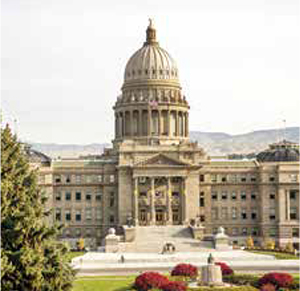 Idaho Governor Brad Little is advocating for the creation of universal occupational licensure as part of his deregulation initiative. Idaho Society President Joseph Canning testified during a legislative committee hearing about concerns that this proposal could lower the bar for licensing engineers.
Little issued two executive orders last year—the Licensing Freedom Act of 2019 and the Red Tape Reduction Act—to target regulations that he believes are barriers to independence and prosperity for Idahoans. These orders built on a process started in 2017 with removal or simplification of some administrative rules and a review of Idaho’s 442 occupational licenses, including the professional engineering license.
At a November hearing of the Idaho State Legislative Committee on Licensing and Certification Laws, legislators discussed the proposal to allow a licensing authority to set procedures for licensing an individual who holds an unrestricted license in another state, district, or territory in the US. This individual must demonstrate competency in the profession or occupation through methods determined by the licensing board or commission.
Canning emphasized during the hearing that licensure mobility is important, but ensuring that Idahoans are protected from potentially dangerous practice of unqualified individuals or businesses should be the top priority. “There was a lot of discussion on competency, scope of services, and health and safety. Is it a good idea for Idaho to ‘lower its licensure bar’ in all cases to the lowest common denominator of every state, territory, and perhaps country? Is it possible to treat all occupations the same for equalizing licensure and, above all, still protect the health, welfare and safety of Idaho’s public?”
Canning’s apprehension about the proposal is the board’s power to issue a “limited” or provisional license if it determines that the applicant holds a license in a state where the occupation’s scope of practice differs from practice in Idaho.
Canning pointed out to the committee that provisional licensing may not work for the engineering profession because an individual can’t provide a provisional stamp or provisional engineering plans and documents. The committee listened and will be considering revisions to the proposal.
Representatives of the Idaho Board of Professional Engineers and Land Surveyors, the state chapter of the American Council of Engineering Companies, the Idaho Bureau of Medicine, and the Idaho Medical Association also participated in the committee hearing discussions.
More PE Report Articles
January/February 2020
November/December 2019