Registration is open for NSPECon26 in New York City, New York!
 Volunteering at NSPE is a great opportunity to grow your professional network and connect with other leaders in the field.
 Decisions at the ballot box influence policies that support engineering standards and public safety.
Over the past decade, many inclusion trainings have concentrated on highlighting behaviors to avoid, often leaving engineers and managers feeling dissatisfied. Annual sessions on diversity, equity, and inclusion, although well-intentioned, can evoke similar reactions. While these initiatives benefit the engineering community at large, they can sometimes leave participants feeling as though they themselves are part of the problem. For instance, middle-aged white males may question why their demographic representation is often singled out, while individuals who are not white, not male, or not middle-aged may feel marked as “different.”
Modern inclusion training, however, is shifting focus. Rather than simply pointing out what not to do, it aims to equip engineers with practical tools and increase awareness of the unintended effects of common approaches. At the upcoming NSPECon26, the session “Building Better Belonging” will tackle this challenge head-on. A sneak peek will be offered during the WORKability Wednesday webinar on April 22, 2026. This article explores what participants can expect.
Leadership in Action: Understanding and Adapting Your Approach
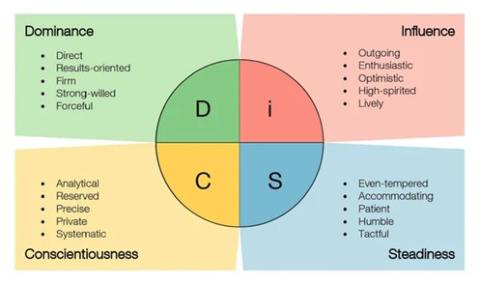
Every journey into effective leadership begins with an introspective look into one’s own style. One widely used tool is the DISC assessment, first conceptualized in the 1920s by William Moulton Marston and further developed in 1940 by Walter Clarke. Today, more than a million people take the DISC assessment each year to better understand their leadership potential. For those who prefer a self-guided approach, studying the four leadership styles in depth can also reveal whether you lean strongly toward one style, or perhaps a blend of two.
What is your leadership style? Do you lean strongly toward one style, or is there a little bit of a second one in there?
After assessing your leadership style, look at the list again and think about your teammates. Are you all the same style? Are you all different? Were there any surprises?
Outstanding leaders do more than understand themselves; they are emotionally intelligent and attuned to the people around them. Intentional leaders adapt their approach to complement the styles of others, creating a more collaborative, engaged, and harmonious workplace.
Belonging at Work: The Foundation of High-Performing Teams
At the heart of effective teamwork is a sense of belonging. A team works best when people feel they belong together. While understanding the stages of team development is important, getting at the root cause of how people act and react is equally as important. Consider Maslow’s hierarchy of needs, which sheds light on the motivations that drive behavior and engagement within a team.
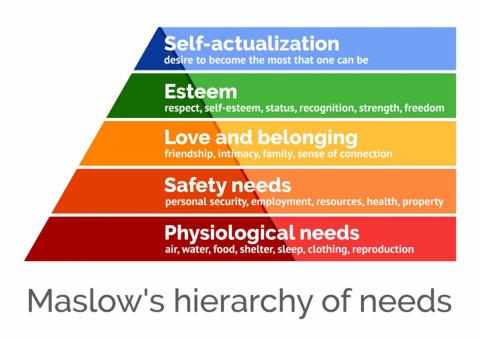
In Maslow’s hierarchy of needs, each level of need must be filled before a person can rise to the next level. At the base of the pyramid are basic human needs: air, water, food, shelter, etc. Once those needs are met, the next levels of need are security, employment, resources, and health.
In the workplace, we can assume that our teammates’ first two levels of needs are met because we are all in place of employment. Therefore, we start at the middle level of the hierarchy, Belonging.
Belonging is critical because many people enter the workplace expecting their teams to perform at peak levels. This expectation works well for established teams where all foundational needs have been addressed. However, conflicts often arise when belonging, the middle level, is overlooked. Without a sense of connection and inclusion, even talented teams may struggle to reach top performance. Once a person feels a sense of connection with their teammates, and even friendship, they are then able to move to the next level—Esteem. At this stage, individuals strive for status, recognition, and the autonomy to contribute fully to the team’s goals. When every team member reaches this level, the team as a whole can rise to self-actualization, achieving peak performance, innovation, and collaboration—the hallmark of a truly high-performing team.
Connection Over Competition: Making Every Team Member Count
We all know the saying that respect is earned. Yet we let unconscious bias creep into our every interaction. The first step is recognizing the bias and calling it for what it is. As NSPE put out in a statement in 2024: “Hidden prejudices and stereotypes influence our thoughts and actions without awareness, potentially leading to unfair or discriminatory behavior.”
That sentiment is key. Most of us aren’t intentionally harmful, but we default to what feels easy, without considering the unintended effects on others. The biggest culprit is small talk. It is so very common in our industry to compare alma maters and discuss sports, as if everyone in the room has played on the field. While some athletes did major in engineering, far fewer than one might assume. Even worse, rivalries can foster an “us vs. them” mindset, subtly shaping all future conversations.
Take a moment to look around the room during this type of small talk. Are there some who are quiet? They are likely feeling left out. If this is the start of a new team, or a team that has been together for a while but is underperforming, another look at how the team kicks off its meetings is warranted. There we go again with the sports talk!
Rather than talking about the alma mater sports teams, what about steering the conversation towards engineering and leadership programs? Ask others about the programs they attended. Compare likes and dislikes; core curriculum; favorite professors. Creating connections around what everyone in the room has in common can foster inclusion, engagement, and ultimately result in better team performance!
Stress Response: Keeping Belonging Intact Under Pressure
A moderate amount of stress can be beneficial, helping individuals stay alert and motivated. However, everyone has a threshold beyond which stress becomes counterproductive and may lead to toxic behaviors that harm team dynamics. Examples include: Dominating—talking over others; Rushing—not considering all options; Withdrawing—retreating to handle situations alone; and Discounting—dismissing others’ attempts to help
Whenever these behaviors manifest, team members feel alienated and the process of establishing belonging must begin anew. Each individual is responsible not only for managing their own stress response, but also for supporting their team members’ sense of belonging.
Just as self-reflection helps identify leadership styles, it is also crucial to examine whether we engage in toxic behaviors under stress. Acknowledging these actions, and striving to improve them, can help restore belonging within teams.
Final Thought: Leveling Up Leadership
Being an inclusive leader and creating belonging on your engineering teams is not something most of us learned in engineering classes, nor in our informal management training received on the job. It may not come as natural to you as applying the mathematically derived Manning’s equation, the Ideal Gas Law, or Ohm’s Law. However, the results of a high-performing team make the effort to level up your leadership skills more than worth it.
As George Harrison reminds us in song: “It's gonna take time. Whole lotta' precious time. It's gonna take patience and time. To do it right!” Just as we invest time and patience in our personal relationships, we must do the same for our professional relationships. Building belonging takes deliberate effort, but the results—a stronger, more collaborative team—are invaluable.